Something a Speaker Can't Do: Why People Are Flooding Back to Live Music Rooms
Let's be honest: your home setup is probably pretty good right now. Maybe you've got a solid Bluetooth speaker, maybe a proper turntable, maybe even one of those audiophile rigs that costs more than a used car. And yet — there you are, paying $40 in service fees to stand in a room where someone will definitely spill a drink on your shoes. Why?
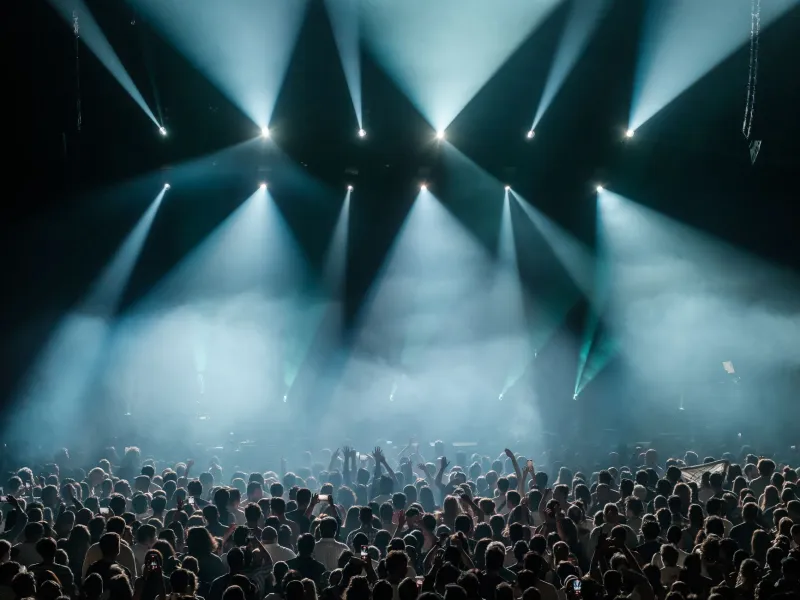
Because something is happening in live music that all the fidelity in the world can't bottle. Attendance at concerts and small-venue shows has surged since the pandemic years, and not just because people had cabin fever to burn off. The return to live rooms has stuck. Touring revenue is breaking records. Tiny clubs that seemed like they'd never recover are turning people away at the door. Something shifted — and it doesn't look like it's shifting back.
The Pandemic Proved What We Almost Forgot
When live music disappeared in 2020, the industry scrambled to replace it. Livestreams, virtual festivals, bedroom performances — some of it was genuinely creative, and some of it was a very polished reminder of what was missing. Audiences watched in their living rooms and felt the absence of something they couldn't quite name.
What they were missing, it turns out, wasn't just the music. It was the situation of music. The stranger next to you losing it during the bridge. The singer visibly nervous before a difficult note. The moment a set goes sideways and everyone in the room feels it at the same time. That shared, unscripted aliveness.
Neuroscientists have a term for part of this: entrainment. When people listen to music together in the same physical space, their brain waves and even their heartbeats begin to synchronize. It's an involuntary biological response — your nervous system locking into rhythm with the people around you. No streaming service, however lossless its audio, can recreate that. The signal travels through air and bodies, not cables.
Sweaty Rooms Are Having a Moment
Here's what's interesting: the live music resurgence isn't happening uniformly at the top. Yes, stadium tours are massive — Taylor Swift's Eras Tour became a genuine economic event, the kind of thing travel journalists and economists wrote about. But the more telling story is smaller. Basement shows in Chicago. Converted warehouse gigs in East LA. Listening rooms in Nashville that cap at 150 people and ask you to actually, genuinely listen.
Artists across genres are deliberately stepping back from the production arms race. Less pyrotechnics, more presence. A growing number of performers are stripping their live shows down — fewer backing tracks, more improvisation, a willingness to let things get weird or fall apart a little. And audiences are responding to that rawness with an almost desperate enthusiasm.
It makes sense when you think about what recorded music has become. Streaming has made music frictionless and abundant to the point of near-invisibility. Songs play in the background of everything. In that context, a live show becomes the opposite of background — it demands your full attention, your body in a specific place, your presence in a moment that won't repeat. That scarcity is the whole point.
The Neurological Case for Getting Off Your Couch
Beyond entrainment, there's a broader emotional architecture to live performance that researchers have been quietly documenting for years. The anticipation of a show — the weeks of low-grade excitement before the date — triggers dopamine responses separate from the actual event. Then there's the communal aspect: being part of an audience activates social bonding mechanisms that solo listening simply doesn't reach in the same way.
There's also something about physical volume and vibration that recorded music, even at high levels through good speakers, approximates but never quite matches. Bass frequencies felt in your chest, the way a loud guitar chord seems to change the air pressure in a room — these are embodied experiences, not just auditory ones. Your whole body is the instrument of reception at a live show. That's a fundamentally different thing from hearing.
Psychologists studying what they call "collective effervescence" — that electric feeling of being part of a crowd united around something — have found that these experiences produce lasting boosts in well-being and social connectedness. The after-glow of a great show isn't just nostalgia. It's measurable.
Artists Are Reading the Room
Smart artists and their teams have noticed the shift in what audiences actually want. The move toward intimacy is real and strategic. Phoebe Bridgers plays venues where she can make eye contact with the back row. Khruangbin has built a cult following partly through live shows that feel meditative and communal rather than spectacular. Indie and alternative artists are leaning into imperfection as a feature, not a bug.
Even artists who could fill arenas are choosing not to, at least for certain tours. There's cultural cachet now in the intimate show, the secret set, the pop-up performance announced 48 hours in advance in a bar that holds 200 people. The scarcity is engineered, sure — but it reflects a genuine understanding that the feeling of exclusivity and presence is what people are chasing.
The global dimension of this is worth noting too. International touring has rebounded with particular force for artists whose music carries cultural weight beyond pop radio. Afrobeats performers selling out American venues, flamenco nights in Brooklyn, Korean indie bands finding US audiences who discovered them through streaming but showed up in person to feel something bigger. The live room has become a place where music's global reach gets made physical.
What You Can't Download
There's a version of this conversation that turns into nostalgia, a lament about screens and algorithms and the death of authentic experience. That's not quite what's happening here. Streaming isn't going anywhere, and that's fine — it's a discovery engine, a memory keeper, a daily companion. Nobody's arguing against it.
But the surge back to live music suggests that people intuitively understand the difference between consuming music and experiencing it. One happens to you; the other happens with you, around you, inside you in a way that requires other people and an unrepeatable moment in time.
The sticky floor, the too-loud monitors, the opener you didn't know who turned out to be the highlight of your night — these aren't inconveniences to be optimized away. They're the texture of something real. And right now, audiences across the country are paying good money, standing in line, and fighting for parking just to feel that texture again.
Some things, it turns out, you just have to be there for.