Your Favorite Singer Never Left — They Just Became Software
The Voice Is the Last Thing That Felt Human
There's a moment in every great song where the singer does something a producer can't program — a crack in a note, a breath held a half-second too long, a vowel bent in a way that only makes sense if you grew up somewhere specific. That moment is the whole point. It's what separates music from sound design.
Now imagine that moment being bottled, catalogued, and sold back to you without the person who created it ever setting foot in a studio again.
That's not science fiction. It's Tuesday.
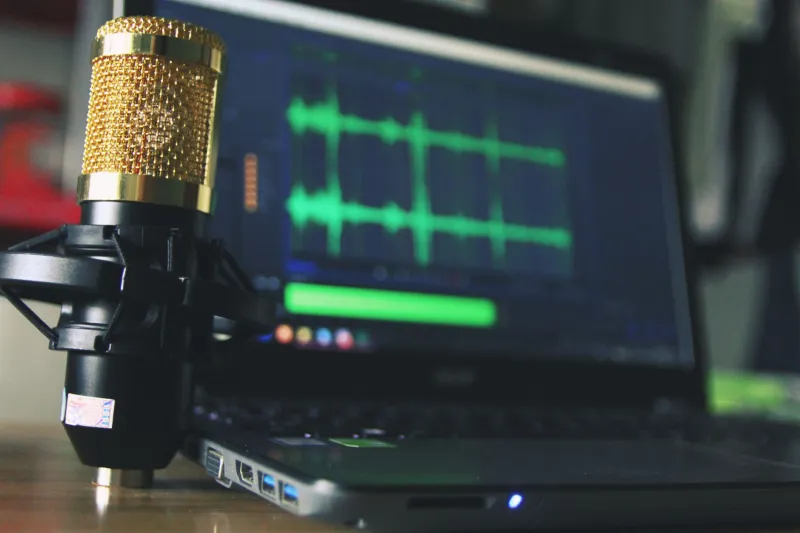
AI voice synthesis has matured fast enough in the past two years that the gap between a cloned vocal and a real one is, for most listeners on most speakers, effectively gone. Startups are already selling access to digital replicas of real performers. Labels are quietly experimenting. And artists — particularly those outside the US and Western Europe, who have the least legal protection and the most to lose — are watching all of it happen in a language they weren't consulted in.
K-Pop's Uncanny Valley Problem
Let's start somewhere obvious: K-pop, an industry that already treats its performers more like precision instruments than people. Fan communities in the US have been consuming K-pop for years now, and one thing that's always been central to the appeal is the parasocial closeness — the sense that BTS or aespa or whoever your bias group is knows you, reaches through the screen.
Now consider what happens when a label can generate a vocal performance from a retired or deceased idol and release it as new content. Or when a group member leaves under bad terms, and the agency simply... keeps using their voice. This isn't hypothetical. There have already been AI-generated tracks mimicking top-tier K-pop acts that circulated on social media with enough convincing detail to spark genuine confusion among fans.
The legal scaffolding around this is thin. South Korea has begun updating its performer rights frameworks, but enforcement across international markets — especially the US, where most of the streaming money lives — is a patchwork at best.
The Bigger Crisis Is Happening Somewhere Else
Here's what doesn't get enough attention in the American conversation about AI music: the artists most vulnerable to voice cloning aren't the ones with lawyers and label deals. They're traditional musicians in places like Nigeria, Vietnam, Colombia, and Morocco, whose voices carry entire cultural lineages and who have almost no legal recourse if those voices get scraped and replicated.
Think about a master griot in Senegal whose recordings have been digitized and uploaded across streaming platforms. Or an Andean folk singer whose voice gets fed into a training dataset for a model that then produces "world music" content for a meditation app. Or a classical Indian vocalist whose distinctive tonal qualities get cloned for a film score produced entirely in a studio in Los Angeles.
In each of these cases, the original artist gets nothing. No credit. No royalties. No say. Their voice becomes a raw material — harvested, processed, and resold the way a mining company might treat ore.
The irony is brutal: these are often the voices that made certain genres globally appealing in the first place. The emotional texture that gets people to click and stream and share is frequently rooted in something deeply regional and human. AI strips that out, repackages the aesthetic, and cuts the source out of the supply chain entirely.
So Is There Any Version of This That Doesn't Suck?
Fair question. And the honest answer is: maybe, but only if the architecture is built differently than everything else in the music industry has been built.
There are researchers and smaller companies arguing that voice synthesis could be a tool for artists rather than a replacement of them. The pitch goes something like this: a singer in rural Ghana could use their own cloned voice to produce content in multiple languages simultaneously, expanding their reach without the cost of repeated studio sessions. A traditional musician with a degenerative condition that affects their vocal cords could continue releasing music after their physical voice changes. An artist who died before their time could authorize, in advance, a limited and controlled digital continuation of their work.
Those are real possibilities. They're also the kind of possibilities that require artists to have meaningful control over the technology — which means IP rights, transparent consent frameworks, and revenue-sharing structures that don't default to whoever owns the platform.
Right now, none of that infrastructure exists at scale.
What Fans Are Actually Buying
There's a consumer angle here that doesn't get enough scrutiny either. When a US listener streams a song, they're not just buying audio. They're buying a relationship with a person — or at least the idea of one. The parasocial economy of modern music fandom is built on the assumption that there's a human being on the other end of the recording.
Voice cloning complicates that in ways that disclosure laws haven't caught up to. If a song is performed entirely by an AI replica of a real artist — with or without that artist's knowledge — and it's released under their name, fans are being sold something that doesn't exist. That's not a niche philosophical concern. That's a basic truth-in-advertising issue, and it's coming for the mainstream faster than most people realize.
Some artists have started getting ahead of it. A handful of high-profile musicians have explicitly prohibited AI training on their work in their contracts. Others have released their own licensed AI voice models as a kind of defensive play — if someone's going to clone your voice, better you control the clone. It's a strange new kind of self-preservation.
The Rhythm Beneath the Question
At Balagana, we spend a lot of time thinking about what it means for the world's musical cultures to actually survive contact with global platforms. Most of the time, the threat is subtler — algorithmic flattening, cultural misattribution, the slow drain of context from music that only makes sense with context.
Voice cloning is different. It's not subtle. It's a direct extraction of the most irreplaceable thing a musician has.
The question isn't really whether this technology will spread. It will. The question is whether the people whose voices made global music worth listening to in the first place will have any say in what gets done with them — or whether they'll just wake up one day to find themselves already archived, already replicated, already replaced.
That's a question worth asking loudly, before the software gets any better at making us forget to ask it at all.