Scroll, Sample, Misread: What Happens When TikTok Becomes the World's Music Teacher
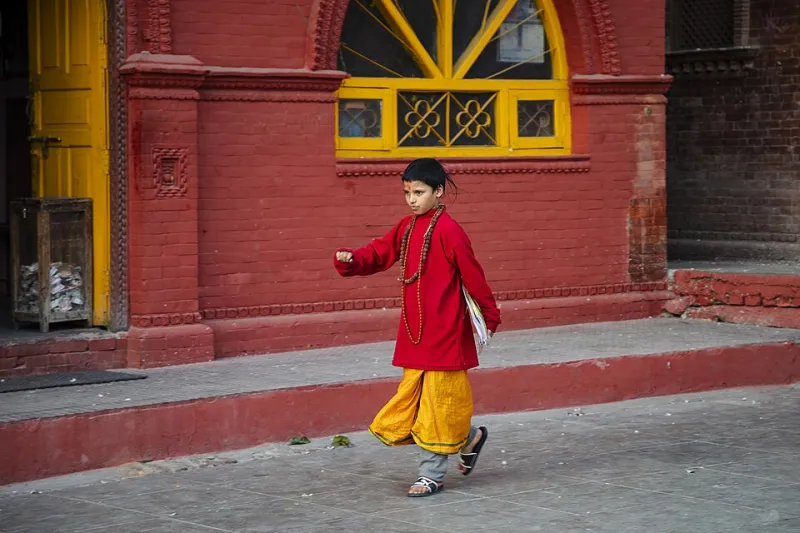
Photo: Bijay Chaurasia, CC BY-SA 4.0, via Wikimedia Commons
The Algorithm Doesn't Know What a Griot Is
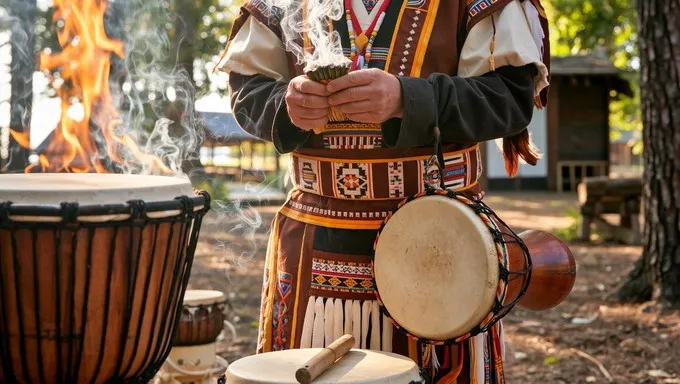
Sometime in 2022, a snippet of West African kora music started showing up in TikTok "study with me" videos. The cascading, harp-like tones of the instrument — traditionally played by griots, hereditary storytellers and keepers of oral history across Senegal, Mali, and The Gambia — became background ambiance for American college students pulling all-nighters. The comments were full of heart emojis. Almost none of them mentioned the griot tradition at all.
That's TikTok in a nutshell, really. It's the most democratizing music discovery engine the world has ever seen, and simultaneously one of the most context-free. For a generation raised on infinite scroll, the platform has become a genuine portal to global sounds — Mongolian throat singing, Hindustani ragas, cumbia from the Colombian coast, Afrobeats from Lagos. But the same compression that makes a tradition accessible can also flatten it into aesthetic wallpaper.
So what's actually happening when Gen Z discovers world music on TikTok? And does it matter if they get the story wrong?
Virality Has Its Own Logic
Let's be honest about what TikTok optimizes for: emotional immediacy. A sound either hits in the first two seconds or it doesn't. That's not a moral failure — it's just how the platform works. The problem is that musical traditions built on depth, ritual, and communal context don't always survive that kind of compression.
Take the case of Bulgarian women's choir music, specifically the haunting, dissonant harmonies of the "mystery voices" style popularized in the West through the iconic Le Mystère des Voix Bulgares recordings. On TikTok, clips of this music frequently go viral attached to aesthetic videos of forests, witchy visuals, and dark academia aesthetics. It sounds eerie and otherworldly to Western ears, which is exactly why it trends — but the music itself emerged from village work songs, harvest rituals, and community celebrations. There's nothing particularly spooky about it in its original context. It's, in many ways, joyful.
Ethnomusicologist Dr. Felicia Sandler, who teaches at a mid-size university in the Pacific Northwest, puts it plainly: "Viral exposure tends to collapse the distance between a sound and its meaning. The music gets repurposed to mean whatever the viewer needs it to mean. That's not unique to TikTok — it happened with New Age appropriation of Indigenous music in the '80s — but the speed and scale are completely different now."
The 'Wrong Reasons' Problem
Some of the most interesting cases are the ones where music goes viral for reasons that would genuinely baffle its originators.
In 2021, a snippet of Ievan Polkka — a Finnish folk song originally written in the 1930s — became a meme sound on TikTok, used primarily in comedic lip-sync videos. The song has cultural weight in Finland and has been part of folk revival movements for decades. Its TikTok incarnation reduced it to a fast, silly audio cue. Finns had... mixed feelings.
Then there's the ongoing conversation around Arabic maqam scales, which kept appearing as "mysterious" or "exotic" background music in travel videos and fashion content. The maqam system is one of the most sophisticated melodic frameworks in the world, with centuries of theory and practice behind it. Being flattened into "sounds like the Middle East" in a 30-second aesthetic reel doesn't exactly honor that complexity.
But here's where it gets genuinely complicated: artists from those traditions are often the ones posting the content. Egyptian producers remixing maqam into hyperpop. Finnish musicians leaning into the Ievan Polkka meme and gaining international followers. The line between cultural flattening and savvy self-promotion gets blurry fast.
Exposure Without Context: A Net Positive?
This is the question that splits ethnomusicologists pretty cleanly. One camp argues that any exposure is a gateway — a teenager who discovers kora music through a study playlist might eventually look up Toumani Diabaté, read about the griot tradition, and develop genuine appreciation. The other camp worries that shallow virality actually forecloses deeper engagement, giving people the feeling of cultural knowledge without any of the substance.
Maria Theresa Aquino, a researcher studying digital music circulation in diaspora communities, offers a middle path. "What I've seen in my work is that diaspora communities are increasingly using TikTok to reclaim their own narratives," she says. "Filipino musicians explaining kulintang. Lebanese artists contextualizing dabke. The platform isn't inherently extractive — it depends entirely on who's holding the camera."
That's the real story, maybe. TikTok as a tool is neutral. The question is who gets to tell the story of a tradition — the person inside it or the algorithm that stumbled across it.
What Responsible Discovery Actually Looks Like
For all its messiness, there are genuinely encouraging corners of TikTok where world music education is thriving. Creators like Aroha Ngata (Māori music traditions), various Korean gayageum players, and a growing cohort of West African percussionists are building substantial audiences by pairing performance with context. These videos get fewer views than the aesthetic repurposing clips, usually, but their comment sections look completely different — full of genuine questions, follow-up searches, people asking where to learn more.
The difference is intentionality. Music with a story attached to it lands differently than music used as sonic texture.
For American listeners especially — raised in a cultural context that often treats "world music" as a single undifferentiated genre rather than, you know, literally all of human musical expression — TikTok represents a real opportunity. The sounds are there. The artists are there. The context is sometimes there too, if you're willing to pause the scroll long enough to read a caption.
Maybe that's the ask. Not that TikTok fix itself — it won't — but that listeners bring a little more curiosity to what they're hearing. Click through. Look up the artist. Find out where the sound came from before you use it as your new alarm tone.
The griot tradition survived colonialism, the slave trade, and the transistor radio. It'll probably survive TikTok too. But it deserves better than being background noise for someone's chemistry notes.