Crossing the Atlantic Backwards: How Grime Producers Are Rewriting the Rules of American Rap
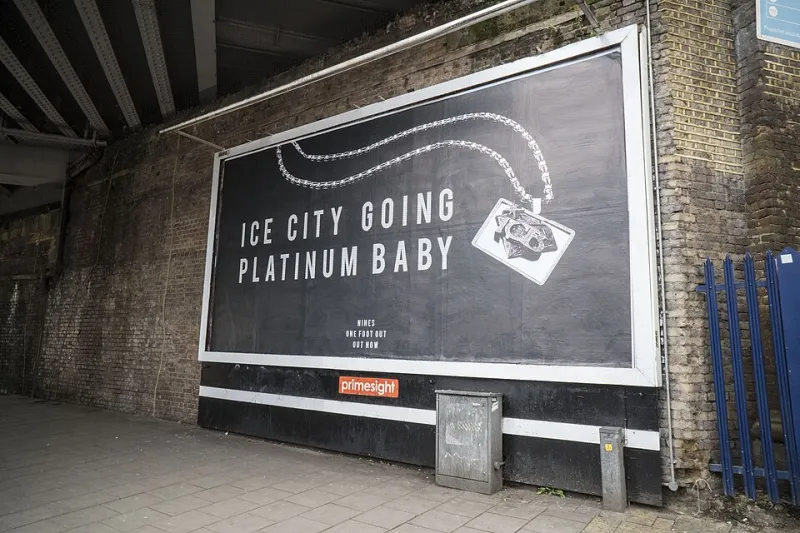
Photo: Jwslubbock, CC BY-SA 4.0, via Wikimedia Commons
There's a moment in a lot of recent rap tracks — you might not catch it the first time — where something feels slightly off in the best possible way. The kick lands a half-beat too early. The synth pad has this cold, almost industrial weight to it. The vocal sits in the mix like it's coming through a broken intercom at a London bus station. You're listening to an American rapper, maybe someone out of Atlanta or Chicago, but the architecture of the sound? That's East London.
For most of pop music history, the cultural current ran one way: America made it, the world absorbed it. Hip-hop, trap, R&B — these were exports. But something has been shifting under the surface for the better part of a decade, and it's now impossible to ignore. Black British grime producers are not just influencing American rap. In some corners of the industry, they're defining it.
What Grime Actually Brought to the Table
To understand the exchange, you have to understand what grime is at its core — and what it was never supposed to be. Born in the early 2000s in the council estates of East London, grime was essentially a collision: UK garage's syncopated rhythms, jungle's aggression, and a distinctly British working-class urgency that had no American equivalent. The tempos were weird — around 140 BPM, too fast for most American ears trained on 90s boom-bap or early 2000s crunk. The production was sparse, almost brutalist. There were no lush samples, no nostalgic soul loops. Just hard geometry.
Producers like Wiley, Jammer, and later Skepta weren't trying to compete with Timbaland or Pharrell. They were building something for their block, their mates, their endz. And that hyper-local specificity — paradoxically — turned out to be exactly what made the sound globally magnetic.
Skeptica's production in particular started turning heads in the US around the mid-2010s. His work on Konnichiwa introduced American listeners to a production aesthetic that was simultaneously futuristic and gritty, polished and confrontational. Dark synth stabs. Percussion that felt like it was processed through concrete walls. Vocal chops that were more industrial than melodic. It didn't sound like anything coming out of Atlanta or New York — and that was the whole point.
The Quiet Pipeline
Here's where it gets interesting. The influence didn't just happen through artists crossing over. It happened through a quieter, more structural pipeline: the producer credit.
Over the last several years, UK-based grime and drill producers — many of them working in London's South and East — have started appearing in the liner notes of major American projects. Sometimes it's a full production credit. Sometimes it's a co-production, where a US beatmaker brings in a British collaborator to add that specific texture, that cold atmospheric quality that's become increasingly desirable in commercial rap.
The UK drill scene, which is itself a descendant of grime, became the clearest bridge. When artists like Pop Smoke and Fivio Foreign built careers on a drill aesthetic heavily shaped by British production sensibilities — the sliding 808s, the minor-key menace, the almost gothic atmosphere — it signaled something significant. American audiences weren't just tolerating the British DNA in the sound. They were seeking it out.
Labels noticed. A&Rs started flying to London. Production camps in Brixton and Hackney started getting calls from managers in Los Angeles. The sound that once felt too niche, too regional, too British for American consumption had become a competitive advantage.
Authenticity, Flipped
This raises a genuinely fascinating cultural question — one that Balagana has been tracking across genres from kuduro to cumbia: what happens to the concept of "authenticity" when the origin story gets complicated?
American hip-hop has always policed its borders around realness. Where you're from matters. The streets you claim matter. The cultural lineage you can trace matters. But what do you do when the sound of your realness was engineered in a flat in Tottenham?
Some American artists have leaned into the ambiguity, treating the transatlantic fusion as just another evolution in hip-hop's long history of cross-pollination. Others have been less transparent, letting the British production DNA do its work without acknowledgment. And then there are artists who've actively collaborated — bringing UK producers into the room, into the credits, and into the conversation about what the music means.
The most honest version of this story isn't one of theft or appropriation. It's one of genuine dialogue, even if that dialogue has been uneven. Grime came from a community that was itself navigating questions of Black British identity, post-colonial displacement, and cultural visibility. When that music lands in an American context, it carries those histories with it, whether or not the listener knows it.
The Producers Who Don't Get the Profile
For every Skepta — who has achieved genuine mainstream recognition on both sides of the Atlantic — there are dozens of producers whose names you've never heard but whose fingerprints are all over records you love.
Producers like Steel Banglez, SL, and a new wave of emerging beatmakers working out of studios from Peckham to Birmingham are crafting sounds that get absorbed into the American mainstream without the attribution. The track gets licensed, the beat gets flipped, the influence trickles down — and the original architect remains invisible.
This isn't unique to grime. It's a structural problem in music production broadly. But it's worth naming specifically here because the conversation about grime's influence on American rap tends to happen at the level of the artist — Skepta meets Drake, Stormzy headlines Glastonbury — rather than at the level of the producer, where the real sonic transfer is taking place.
What It Means for the Sound of American Music
If you want to hear the future of American rap production, don't just watch the Billboard charts. Listen to what's coming out of South London's underground right now. The minor-key synth work, the stuttered percussion patterns, the way silence gets used as a rhythmic element — these techniques are already in transit, already being absorbed into sessions in Atlanta, Houston, and New York.
The mothership, as it were, has changed coordinates. The signal is coming from somewhere new. And American hip-hop — always at its best when it's absorbing and transforming outside influences — is already tuning in.
The question isn't whether grime producers will keep shaping the sound of American rap. They already are. The question is whether the culture will catch up to what the music has been telling us for years: that the rhythm of Black British creativity deserves its name in the credits, its seat at the table, and its place in the story.