The Club Doesn't Forget: How Underground Dance Floors Are Keeping 'Dead' Music Alive
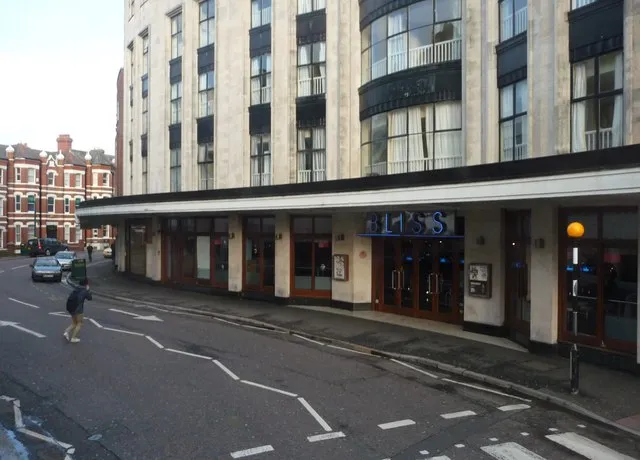
Photo: Lewis Clarke, CC BY-SA 2.0, via Wikimedia Commons
Every few years, some music journalist declares a genre dead. The obituary gets written, the retrospective gets published, the Spotify playlist gets curated with a tasteful title like RIP: The Sound of an Era. And then, somewhere in a basement in Detroit or a repurposed warehouse in Lisbon or a ballroom in Harlem, someone puts on the record — and the room goes absolutely insane.
The genre isn't dead. It never was. It just moved underground, where it's been quietly evolving, mutating, and waiting for the rest of the world to catch up.
This is the story of what happens to music after the mainstream abandons it. And it turns out, the answer is more interesting — and more important — than anyone in the music industry is really talking about.
The Archive That Sweats
Museums preserve things behind glass. Libraries store them on shelves. But certain kinds of musical knowledge can't survive that way. You can't put a groove in a display case. You can't archive the feeling of a room when a DJ drops the right record at the right moment. The knowledge lives in bodies, in communities, in the specific social rituals that grow up around a particular sound.
This is why underground dance floors function as something that no institution can fully replicate: a living archive. Not a static record of what a genre sounded like, but an ongoing, breathing, sweating demonstration of what it does — what it means to the people who carry it.
Detroit techno is the obvious example, and it's worth starting there because the story is so stark. By the mid-1990s, the mainstream had largely moved on. House had gotten glossier, rave culture had gone pop, and the spare, industrial minimalism of early Detroit techno — the stuff that producers like Juan Atkins, Derrick May, and Kevin Saunderson had built in the shadow of a collapsing auto industry — seemed like a relic.
Except it didn't die. It went deeper underground, both literally and figuratively. The clubs that kept it alive — in Detroit, yes, but also in Berlin, in Chicago, in small cities across the Midwest — weren't operating as preservation projects. They were just communities of people who genuinely loved the music and refused to stop dancing to it. The archive was maintained not through institutional intention but through collective devotion.
Kuduro and the Lisbon Exception
Not every story of underground preservation happens in the obvious places. One of the most fascinating examples right now is playing out in Lisbon, Portugal, in neighborhoods that most American tourists never see.
Kuduro is an Angolan genre — fast, percussive, built on a kind of rhythmic intensity that feels almost confrontational if you're not used to it. It emerged in Luanda in the late 1980s and spread through the Angolan diaspora, including the large Angolan community in Lisbon's outer suburbs. For a brief moment in the early 2010s, it looked like kuduro might cross over globally — artists like Buraka Som Sistema brought it to festival stages, and there was genuine buzz about it becoming the next big world music export.
That crossover moment faded. The mainstream moved on to Afrobeats, to Amapiano, to the next thing. But in Lisbon's peripheral neighborhoods — Amadora, Almada, Odivelas — the parties never stopped. The kuduro scene there has continued to evolve in complete isolation from global trends, developing its own internal logic, its own stars, its own arguments about what the music should sound like.
What's happening in those rooms is genuinely irreplaceable. This isn't nostalgia. The DJs aren't playing old records as a tribute to the past. They're playing new music in a tradition that the wider world forgot to pay attention to. The genre is alive precisely because the community refused to let it become a memory.
Ballroom's Long Game
For American audiences, the most resonant example of underground preservation might be New York's ballroom scene — though calling it "underground" at this point requires some qualification. Thanks to the television series Pose and the documentary Paris Is Burning, ballroom has received more mainstream attention in the last decade than at any point in its history.
But here's the thing about ballroom culture: the mainstream attention didn't change what happens inside the houses. The walks, the categories, the judging, the community structures built around houses like LaBeija, Xtravaganza, and Ninja — these have continued largely on their own terms, in their own spaces, for their own people. The mainstream looked in through the window, got inspired (and sometimes took without credit), and then moved on. The scene remained.
Vogue — the specific dance form that emerged from ballroom — has been declared "mainstream" multiple times since Madonna made it famous in 1990. And every time the mainstream loses interest, the ballroom community just... keeps going. The form has evolved dramatically over those decades, developing new styles like vogue femme and old way, generating ongoing debates about technique and authenticity that have nothing to do with what's trending on TikTok.
This is what genuine cultural preservation looks like. Not a museum exhibit about what the scene used to be, but a living community that continues to generate new knowledge, new artists, and new arguments about its own traditions.
Why the Club Gets It Right When Institutions Get It Wrong
There's an obvious question here: why can't official cultural institutions — universities, museums, government arts programs — do this job? Why does preservation work better on a sticky dance floor at 2 AM than in a climate-controlled archive?
Part of the answer is economic. Underground club scenes are often rooted in communities that have been systematically excluded from institutional resources. Detroit's techno community, New York's ballroom scene, Lisbon's kuduro dancers — these are predominantly Black and brown communities with limited access to the kind of funding that builds museums and endows academic programs. The club was the only institution available, so they made it work.
But there's something deeper too. Dance music is participatory in a way that resists passive preservation. You can record a kuduro track, but the recording doesn't capture the social context that makes the music meaningful — the specific crowd, the specific moment, the specific way a DJ reads the room and makes a decision that changes the night. That knowledge only survives through practice, through people who keep showing up and keep dancing.
What Gets Lost When the Floor Goes Dark
Clubs close. Communities scatter. Rents go up, neighborhoods gentrify, the old spot becomes a boutique hotel or a co-working space. When that happens, something genuinely irreplaceable can disappear — not just a venue, but a living repository of cultural knowledge that existed nowhere else.
This is why the stakes of underground club preservation are higher than they might look from the outside. The music that these communities maintain isn't just entertainment. It's a record of how specific groups of people — often marginalized, often overlooked — made meaning, built community, and survived. When the floor goes dark permanently, that record gets harder to read.
At Balagana, we talk a lot about where the world's rhythms are alive. The answer, more often than you'd expect, is in a room with no windows, a serious sound system, and a crowd of people who know exactly what they're protecting — even if they'd never use that word for it.
They're just dancing. Which is, it turns out, enough.