Hidden in the Mix: The Immigrant Producers Who Quietly Shaped the Sound of American Music
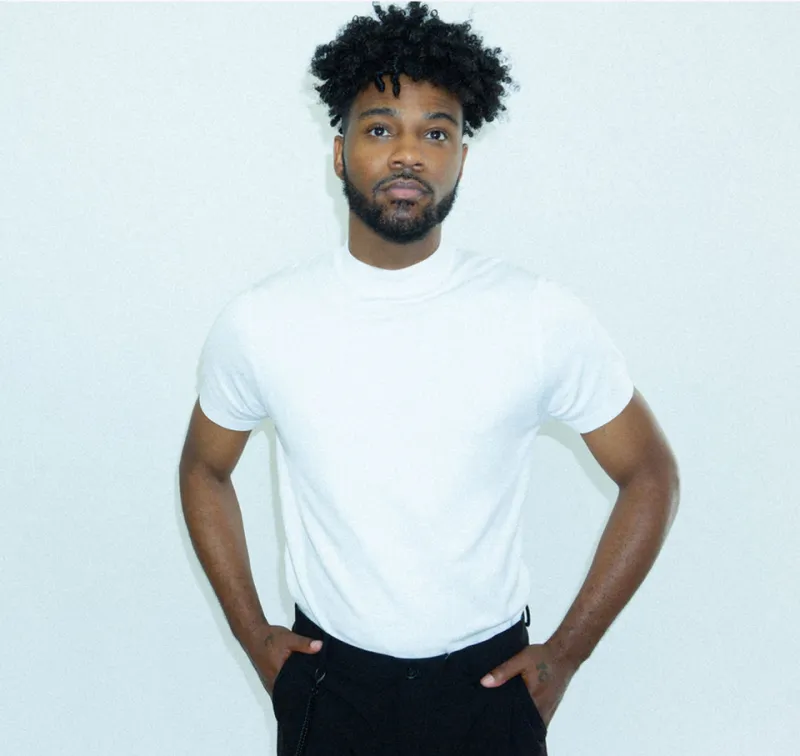
Photo: SorumTV, CC BY-SA 4.0, via Wikimedia Commons
The Credit That Doesn't Tell the Whole Story
Flip open the liner notes of almost any major American album — if people still did that kind of thing — and you'd find a list of names that reads like a small United Nations. Producers from Lagos and Kingston. Engineers from São Paulo and Seoul. Session musicians who learned their craft in Beirut or Bucharest before landing in a studio in Burbank. These are the people who actually build the architecture of the music we call "American."
And yet the cultural labor embedded in their work is almost entirely invisible. When a Nigerian-born producer reaches for a particular drum pattern, when a Cuban-American arranger chooses a specific brass voicing, when an Iranian immigrant engineer makes a spatial decision in the mix — those choices carry entire histories inside them. Histories of belonging and displacement, of sounds from home translated into something the market will accept, of finding a way to exist between two worlds through the only language that doesn't require a visa.
This is a story about ghost notes. In music theory, a ghost note is a pitch that's technically there but played so softly it's more felt than heard. A lot of immigrant cultural identity in mainstream music works exactly like that.
The Session Player Who Brought the Room With Them
Consider the career of producers and session musicians who came up through the Miami Latin music scene in the late '80s and '90s. Miami was — and remains — one of the most culturally layered music cities in the United States, a place where Cuban son, Haitian kompa, Jamaican dancehall, and Brazilian baile funk existed in genuine proximity. The producers who came out of that environment carry all of it in their ears, whether or not it's legible in the final product.
When those producers crossed over into mainstream pop and R&B work — which many did, successfully — they brought with them specific rhythmic sensibilities, approaches to percussion and bass relationships, and a particular understanding of how to make a body move that is distinctly Caribbean in origin. None of that shows up in a press release. But you feel it.
"There's a way that immigrant musicians hear space differently," says one session guitarist who came to the US from the Philippines in his early twenties and has since played on dozens of records you'd recognize immediately. He asked to remain anonymous because he worries about being pigeonholed. "Back home, music was communal. It filled a room, a street, a whole neighborhood. When I play in a studio here, I'm always thinking about that scale. American pop tends to think smaller — more intimate, more internal. I'm always pushing back against that, even when nobody notices."
Displacement as Sonic Philosophy
There's a concept in diaspora studies sometimes called "double consciousness" — the experience of seeing yourself through two sets of eyes simultaneously, your own and the dominant culture's. For immigrant musicians working inside the American industry, this duality doesn't stay abstract. It becomes a production philosophy.
Take the widespread influence of producers from the Caribbean on hip-hop and R&B. The Jamaican sound system tradition — built around massive bass, communal listening, and the DJ as cultural authority — is so deeply embedded in hip-hop's DNA that it's rarely even discussed as an import anymore. It's just "how rap sounds." But that aesthetic didn't emerge from nowhere. It traveled with people. It was a choice made by specific human beings who brought specific cultural memories into specific studios.
The same dynamic plays out across genres. Indian classical music's influence on ambient and electronic production. The West African polyrhythmic sensibility that underlies so much funk and neo-soul. The Eastern European folk harmonics that quietly shaped certain strains of indie folk. These aren't accidents or happy coincidences. They're the sound of people making music out of everything they carry.
Researcher and music journalist Claudette Osei, who has spent years documenting the African diaspora's influence on British pop, describes it this way: "The music industry has always been very good at absorbing immigrant sound while erasing immigrant credit. You get the aesthetic without the attribution. The groove without the geography."
What the Mix Doesn't Say
Engineering is where this story gets particularly interesting, because mixing and mastering decisions are so technical and so removed from public conversation that almost no one outside the industry thinks about them as cultural acts. But they absolutely are.
An engineer who grew up listening to music in a specific acoustic environment — a particular kind of room, a particular balance of instruments — will make subtly different choices than someone who didn't. The way low frequencies sit in a mix, the amount of reverb on a vocal, the relationship between the kick drum and the bass line: these are all aesthetic choices, and aesthetic choices are always cultural choices.
Several engineers who immigrated from Latin America and West Africa have described, in various interviews over the years, a constant negotiation between what their ears tell them sounds right and what American A&Rs and label executives expect to hear. The result is often a hybrid — something that passes as conventional by industry standards but carries an undertone, a warmth, a rhythmic feel that comes from somewhere else entirely.
"I always say my records have an accent," one Bogotá-born engineer told a trade publication a few years back. "Most people can't hear it. But I can."
Listening Differently
None of this is meant to suggest that immigrant musicians are somehow trapped in their cultural origins, perpetually translating the old world into the new one. Many of the producers and engineers doing this work don't think of it in explicitly cultural terms at all — they're just making music, drawing on their full range of experience, the same way any artist does.
But there's something worth sitting with in the recognition that the music we call American is, at its foundation, a conversation between everywhere. The sounds that feel most native to us — the ones we grew up with, the ones that feel like home — are often the product of people for whom home was somewhere else, who brought that somewhere else into a studio and let it quietly shape what you'd eventually hear through your earbuds on the subway.
Next time a song hits you in a way you can't quite explain — something in the rhythm that feels slightly off-center in the best possible way, or a texture in the production that sounds familiar but foreign at the same time — that might be the ghost note. That might be someone's whole history, compressed into a sonic choice, waiting for you to wonder where it came from.
At Balagana, we think that wondering is worth doing. The world's rhythms don't stop at borders. They just change their names.