Ukuleles, Violins, and Colonial Ghosts: Why Gen Z Can't Stop Streaming Keroncong
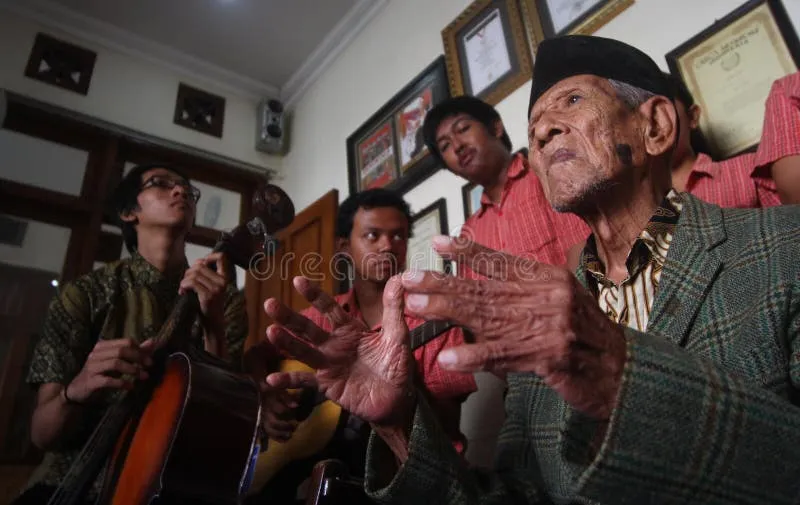
Photo: Indonesian musician playing acoustic guitar traditional keroncong music performance, via thumbs.dreamstime.com
Somewhere between a lo-fi study playlist and a late-night algorithm rabbit hole, American college students are discovering a genre they almost certainly can't pronounce — and they're absolutely hooked. Keroncong (say it like keh-ROHN-chong) has been floating around Indonesian culture for roughly four centuries, but in the last two years, it's quietly crept onto global streaming charts, TikTok "chill vibes" compilations, and the carefully curated playlists of music nerds who pride themselves on finding sounds before anyone else does.
The genre's resurgence is one of those cultural moments that feels both entirely surprising and, in hindsight, totally inevitable.
What Even Is Keroncong?
To understand why keroncong is having its moment, you need a quick history lesson — and it's a genuinely wild one. The genre traces its roots back to the 16th century, when Portuguese sailors and traders arrived in what is now Indonesia, bringing with them small stringed instruments related to the ukulele. Over generations, those instruments blended with Javanese and Sundanese musical traditions, producing something entirely new: a gentle, lilting sound built on acoustic guitars, ukuleles, flutes, cellos, and a distinctly unhurried sense of rhythm.
For much of the 20th century, keroncong was Indonesia's popular music — the soundtrack of a young nation finding its identity. President Sukarno reportedly loved it. But by the 1980s and 90s, it had largely retreated to the living rooms of grandparents and the back shelves of specialty record shops. Younger Indonesians chased Western pop, hip-hop, and eventually K-pop. Keroncong became, as one Jakarta-based music writer recently put it, "the music your grandmother played while she cooked."
Then the algorithm intervened.
TikTok Did What TikTok Does
In 2022, a handful of short videos featuring keroncong recordings — some vintage, some newly produced — started accumulating views on TikTok in ways nobody predicted. The clips weren't going viral in the traditional sense. There was no single breakout moment, no celebrity co-sign. Instead, they spread slowly and steadily through the platform's "world music" and "aesthetic" communities, the same corners of TikTok that had already made Bossa Nova playlists and Ethiopian jazz a thing among American twentysomethings.
Spotify's editorial team noticed. By 2023, keroncong tracks were appearing on algorithmically generated playlists with names like "Global Chill" and "Sunday Morning Acoustic," nestled between Japanese city pop and Malian guitar music. Listeners who had never heard of Indonesia's colonial history were suddenly spending their Sunday mornings with a genre shaped by it.
For Indonesian diaspora communities in cities like Los Angeles, Houston, and the Bay Area, the reaction was complicated.
Reclaiming the Sound
"There's something genuinely exciting about seeing your grandmother's music on a playlist next to artists from Brazil and Mali," says one second-generation Indonesian American musician based in the Bay Area who has been incorporating keroncong elements into her indie folk recordings. "But there's also this anxiety — like, are people actually hearing it, or are they just consuming the vibe?"
That tension sits at the heart of keroncong's current moment. The genre carries real historical weight. Its origins in colonial-era Indonesia mean it's always been a hybrid, always been a negotiation between cultures — but it's a negotiation that happened on Indonesian soil, shaped by Indonesian hands, and eventually claimed as distinctly Indonesian. When Western listeners strip away that context and slot it into a "chill background music" playlist, something gets lost.
But here's the thing: diaspora artists aren't sitting back and letting that happen. A growing number of Indonesian American and Indonesian Australian musicians are actively working to bring keroncong to new audiences on their own terms. Producers in Jakarta and Bandung are releasing albums that blend keroncong's string arrangements with electronic production, ambient textures, and even elements of indie rock — creating something that feels contemporary without erasing where it came from.
Bands like Krontjong Toegoe have been doing this work for years, but they're finding bigger international audiences now than ever before. Meanwhile, younger artists are posting "keroncong explained" videos on YouTube that double as both music history lessons and promotional content — a savvy move that gives curious Western listeners the context they need to actually appreciate what they're hearing.
Authenticity in the Age of the Algorithm
The keroncong conversation is really a microcosm of a much bigger debate happening across the global music world right now. Streaming platforms have made it easier than ever for listeners to access music from every corner of the planet — which is genuinely wonderful. But algorithms optimize for engagement, not context. They'll serve you a keroncong track because it matches the sonic profile of something you already liked, not because they want you to understand its history.
That gap between accessibility and understanding is where things get tricky. Is a 20-year-old in Ohio who streams keroncong while doing homework "discovering" the genre, or are they just using it as background noise? Does it matter, as long as the streams translate into income for Indonesian artists?
Ethnomusicologists are divided. Some argue that any exposure is good exposure — that a listener who starts with a chill playlist might eventually dig deeper and genuinely engage with the music's cultural context. Others worry that the flattening effect of streaming culture turns rich, layered musical traditions into aesthetic commodities, indistinguishable from each other on the surface.
Where It Goes From Here
What makes keroncong's story particularly interesting is that it doesn't fit neatly into any of the usual narratives about "world music" going global. It's not a genre that was preserved in amber and then discovered by outsiders. It's a living tradition that has always evolved, always absorbed new influences, and always meant different things to different generations of Indonesians.
The artists driving its current revival seem to understand that. They're not trying to freeze keroncong in time or present it as an exotic artifact. They're treating it the way great musicians always treat tradition — as a foundation to build on, argue with, and ultimately transform.
For American listeners tuning in through their streaming apps, the invitation is there: go deeper. Learn the history. Follow the diaspora artists doing the real creative work. Let keroncong be more than a vibe.
Because trust us — once you actually hear what this genre can do, the vibe alone won't be enough.