From the Bronx to Bogotá: How Latin Trap Rewired the DNA of Global Hip-Hop
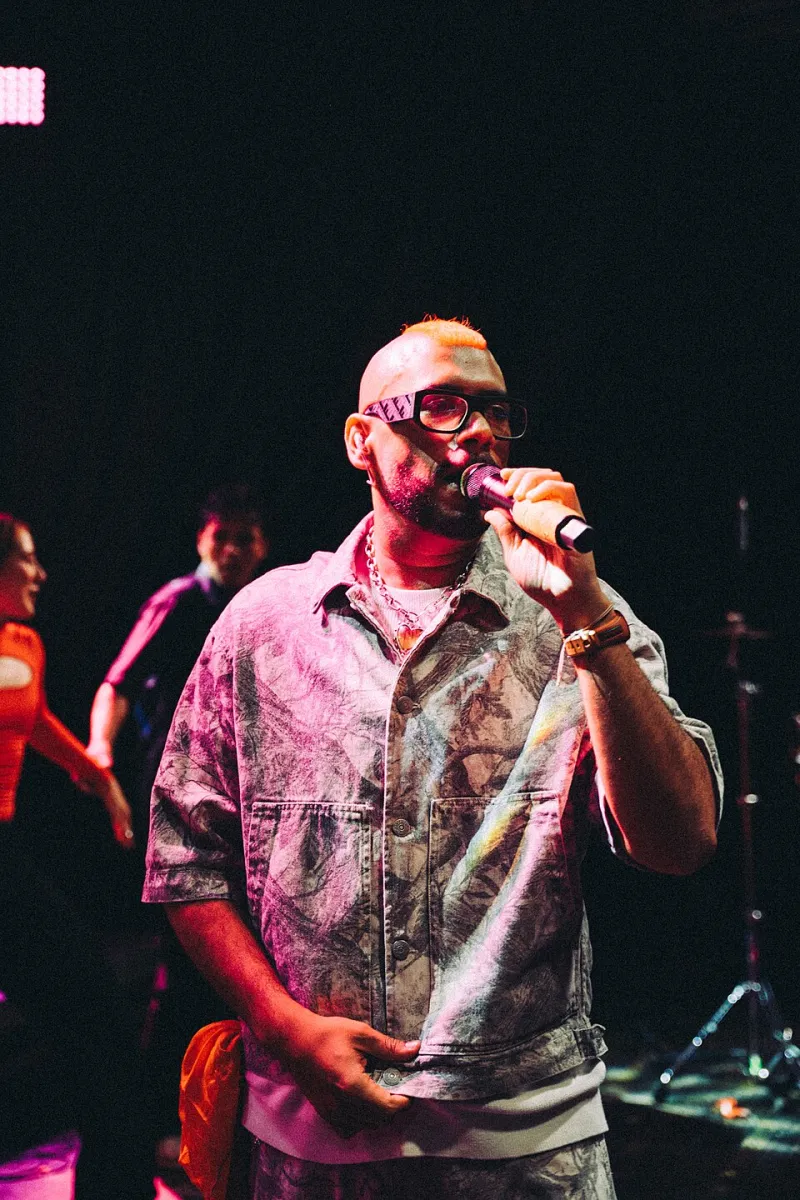
Photo: Laura Botero, CC0, via Wikimedia Commons
There's a moment in Bad Bunny's early mixtapes where you can hear it — that unmistakable collision of Atlanta trap's slow-drip hi-hats and reggaeton's dembow kick pattern. It sounds like two neighborhoods arguing through a speaker, and somehow, the argument is beautiful. That tension is exactly what Latin trap is built on, and it's why the genre hasn't just survived — it's taken over.
Latin trap didn't arrive with a press release or a marketing budget. It crept out of SoundCloud pages, Dominican barbershops in Washington Heights, and Puerto Rican basements in the Bronx sometime around 2013 and 2014. By the time the mainstream music industry looked up from its spreadsheets, the genre had already racked up billions of streams and launched careers that now fill arenas from Miami to Madrid.
Where Two Sounds Became One
To understand Latin trap, you have to understand what each parent genre brought to the table. Trap — as pioneered by Atlanta producers like Lex Luger and Zaytoven — gave the world those menacing 808 bass drops, rapid-fire hi-hat rolls, and an atmosphere that felt like 3 a.m. on an empty highway. Reggaeton, meanwhile, brought the Caribbean: the dembow rhythm, the heat, the bilingual swagger, and decades of working-class Latino storytelling.
Producers like Tainy, Sky Rompiendo, and Dimelo Flow were among the architects who figured out how to stitch these two sonic identities together without losing what made either one special. The dembow didn't disappear — it just started sharing space with trap's signature darkness. Spanish lyrics didn't get swapped out for English — they got sharper, more experimental, sometimes switching mid-verse in ways that felt natural to anyone who grew up code-switching between two cultures.
"It was never about making trap in Spanish," one producer close to the early Puerto Rican scene has explained in interviews. "It was about making something that sounded like how we actually live — between worlds, always."
The Diaspora Connection
Here's what often gets lost in think-pieces about Latin trap: this music isn't just a genre, it's a geography. It maps the experience of being Latino in America — specifically the experience of being from somewhere else while also being deeply, stubbornly from here.
For second-generation kids in the Bronx, in Hialeah, in East Los Angeles, Latin trap sounded like their reality in a way that neither straight-up hip-hop nor their parents' salsa or cumbia quite did. It held both things at once. Bad Bunny rapping about struggling to pay rent in Puerto Rico hit different when your own family was sending remittances back home. Anuel AA's street narratives carried weight that US hip-hop fans recognized immediately, even if they'd never set foot in Carolina, Puerto Rico.
That dual citizenship — sonic and cultural — is what allowed Latin trap to travel. When the genre landed in Colombia, Mexico, and Argentina, it didn't feel like an import. It felt like a mirror. Local artists started putting their own regional flavors into the template: Colombian artists brought elements of champeta and vallenato rhythms into the mix; Mexican artists wove in norteño guitar textures. The genre became a framework that could hold almost anything.
Streaming Changed Everything
Timing matters in music, and Latin trap got very lucky with its timing. The genre's rise coincided almost exactly with the explosion of Spotify and YouTube as the primary ways people actually discovered new music. In the old radio-and-label world, a bilingual genre with no clear format home would have struggled to find an audience. In the streaming era, algorithms didn't care about format. They cared about plays.
Bad Bunny's "Soy Peor" didn't need radio to reach 400 million YouTube views. Ozuna didn't need a major label push to become one of the most-streamed artists on the planet in 2018. The numbers spoke loudly enough that the labels came running — which brought bigger budgets, bigger collaborations, and a new wave of visibility.
The crossover moments that followed — J Balvin and Willy William's "Mi Gente" getting a Beyoncé remix, Bad Bunny popping up on Cardi B tracks, Karol G landing Grammy nominations — weren't accidents. They were the natural result of a genre that had already proven its global appeal before anyone in a corner office gave it permission.
Beyond the Hype: What Latin Trap Actually Changed
It's easy to talk about streaming numbers and chart positions. What's harder to quantify is the cultural shift Latin trap represents inside the broader hip-hop world.
For decades, the mainstream hip-hop industry operated with an unspoken English-first policy. Spanish-language rap existed, but it lived at the margins — respected in its lane, rarely invited to the main stage. Latin trap didn't ask for permission to cross that line. It just crossed it, and the numbers backed up the move so decisively that the conversation changed.
Today, it's completely normal for a track to chart on both the Billboard Hot 100 and the Hot Latin Songs chart simultaneously. It's normal for English-language rappers to seek out reggaeton-influenced production. The sonic vocabulary that Latin trap introduced — those specific rhythmic combinations, that particular emotional temperature — has seeped into pop, R&B, and mainstream hip-hop in ways that most listeners don't even consciously register anymore.
That's how you know a genre has really won: when its fingerprints are everywhere, even on music that doesn't claim it.
What Comes Next
Latin trap in 2024 sounds different from Latin trap in 2016, and that's a sign of health, not drift. The genre keeps absorbing new influences — Afrobeats rhythms, drill production techniques, ambient electronic textures — while maintaining the core identity that made it resonate in the first place.
New artists are pushing the form in directions the originators might not have predicted. Female artists like Villano Antillano and Tokischa are bringing queer perspectives and feminist politics into a space that was initially pretty male-dominated. Producers are experimenting with tempos, with sampling, with structures that don't fit neatly into any existing category.
The Bronx started something. The Caribbean amplified it. The internet spread it. And now the world is still figuring out what it means.
That's the thing about rhythms that come from real places and real people — they don't stop moving just because someone tries to define them.