Wired to the Spirit World: How Southeast Asian Producers Are Quietly Blowing Up Western Electronic Music
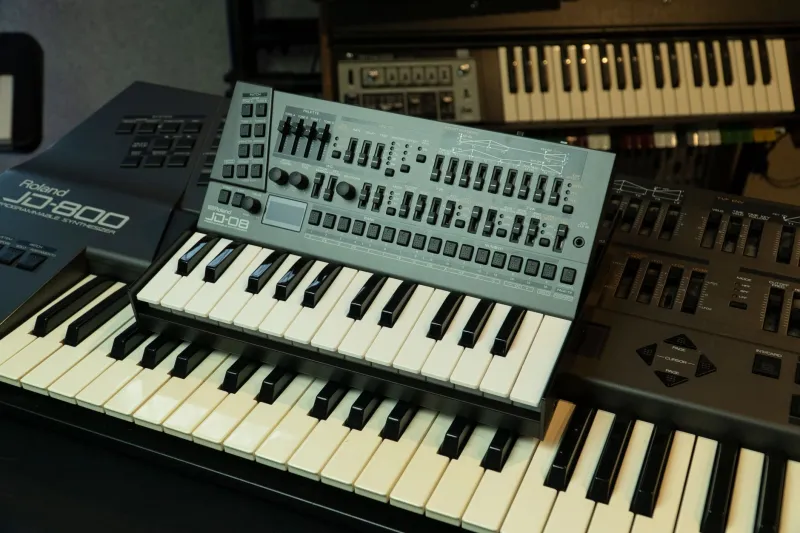
Somewhere in a Bangkok apartment, a producer named Maft Sai is running the metallic ring of a khim — a hammered dulcimer that's been central to Thai classical music for centuries — through a Eurorack modular system. The result doesn't sound like anything you'd find in a Splice sample pack. It doesn't sound like ambient. It doesn't sound like techno. It sounds like something older and stranger, and if you've been paying attention to what's bubbling up in certain corners of SoundCloud and Bandcamp, you already know that sound is spreading fast.
Southeast Asian electronic music has been doing its own thing for a while now. But in the last couple of years, something has shifted. Western producers, A&R reps, and streaming curators are starting to notice — and the artists who've been building these sounds in relative obscurity are suddenly fielding calls they weren't expecting.
Ancient Instruments, Modular Minds
The core appeal here isn't novelty. It's not a gimmick where someone drops a traditional flute sample over a four-on-the-floor kick and calls it fusion. What's happening in cities like Ho Chi Minh City, Jakarta, and Chiang Mai is more structural than that. Producers are treating instruments like the Vietnamese đàn tranh, the Cambodian chapei dong veng, and the Indonesian gamelan not as decoration but as the actual architecture of a track.
Take the gamelan — the interlocking bronze percussion ensemble that's been the rhythmic backbone of Javanese and Balinese culture for hundreds of years. Its tuning system doesn't conform to Western equal temperament. Those microtonal intervals, those slightly "off" pitches by Western standards, create a natural tension when fed into synthesis chains. Indonesian producers have figured out that this tension isn't a problem to be corrected. It's a feature. It creates a harmonic texture that Western electronic music, for all its sophistication, genuinely cannot replicate from scratch.
Similarly, the khim's attack and decay profile — the way a note blooms and fades — interacts with reverb and delay in ways that are fundamentally different from a piano or a Rhodes. Run it through a granular synthesizer and you get something that sounds simultaneously ancient and completely alien. That's not an accident. That's compositional intelligence.
The Producers You Need to Know
The scene isn't monolithic, and that's part of what makes it compelling. Thailand's Paradise Bangkok Molam International Band has been blending mor lam folk traditions with electronic production for years, and their influence on younger producers in the region has been enormous. Vietnam's Nguyen + Nguyen (the duo behind some of the most talked-about experimental club tracks to come out of Southeast Asia recently) have been building a sound that incorporates đàn bầu — a single-string instrument capable of extraordinary pitch bending — into dense, hypnotic electronic compositions.
In Indonesia, the label Yes No Wave has spent over a decade documenting and releasing some of the most genuinely weird and wonderful music on the planet, creating an archive that Western producers are increasingly mining for inspiration — sometimes with proper credit, sometimes without. That tension around attribution and influence is a whole other conversation, and it's one the scene is very much having.
What connects all of these artists isn't geography so much as a shared willingness to reject the idea that electronic music has a default cultural setting. For a long time, the genre's center of gravity was understood to be Detroit, Berlin, London. That understanding is getting complicated.
Why Western Producers Are Paying Attention
Here's the honest answer: Western electronic music is in a bit of a creative rut. Not a commercial rut — the numbers are fine. But if you've spent time in production forums or talked to working producers lately, there's a creeping sense that the toolkit feels exhausted. Every possible permutation of 808s and sidechain compression has been explored. The sample libraries feel recycled. The genre tags feel meaningless.
Southeast Asian electronic music offers something genuinely different at the level of raw material. Those microtonal scales. Those non-Western rhythmic frameworks. The way certain traditional instruments respond to electronic processing in unexpected ways. For a producer who's been staring at the same DAW session for six months, hearing a chapei run through a distortion pedal and a reverb tank is genuinely revelatory.
There's also a growing awareness among younger American producers — many of them from the diaspora, many of them not — that the Western canon of electronic music is narrower than it was always presented as being. The internet has made it easier than ever to find the stuff that wasn't in the textbooks, and what a lot of people are finding is that the most interesting sonic territory has been inhabited for a long time by artists who just weren't getting the press coverage.
The Streaming Platform Race
Major labels and playlist curators are moving, if not quite fast enough. Spotify's editorial team has expanded its Southeast Asian-focused playlists significantly over the past two years. Apple Music has been licensing more content from regional labels. A few major-label A&R reps have been quietly attending festivals in Bangkok and Jakarta, looking for the next signing that lets them say they were early.
The artists themselves have complicated feelings about this. Some welcome the visibility and the resources. Others are wary of the way major-label interest tends to flatten the edges of a scene — to identify the most commercially legible version of a sound and amplify that while the stranger, harder-to-categorize stuff gets left behind. It's a dynamic that's played out in every global music wave that's crossed into the American mainstream, from reggae to K-pop, and there's no reason to think Southeast Asian electronic music will be immune.
More Than a Trend
What feels different this time — or at least, what the optimists in the scene will tell you — is that the infrastructure is more resilient. Independent labels, Bandcamp followings, Patreon-supported artists, direct-to-fan distribution. The tools that allow a producer in Ho Chi Minh City to build a real audience in Brooklyn without ever going through a traditional label have matured considerably. The scene doesn't need a major label co-sign to survive the way it might have fifteen years ago.
That doesn't mean the commercial attention is irrelevant. Money matters, and wider audiences matter. But it does mean that the music's development isn't entirely at the mercy of what Western gatekeepers decide to promote.
What's happening right now in Southeast Asian electronic music is genuinely exciting — not because it's exotic, not because it's a novel flavor to sprinkle onto familiar structures, but because it's asking real questions about what electronic music is for, where it comes from, and who gets to define its future. Those are questions worth sitting with. And the sounds coming out of Bangkok, Jakarta, and Ho Chi Minh City right now are a pretty compelling reason to start listening.