Built From Bolts and Memory: The Garage Luthiers Inventing Instruments Nobody Has a Name For
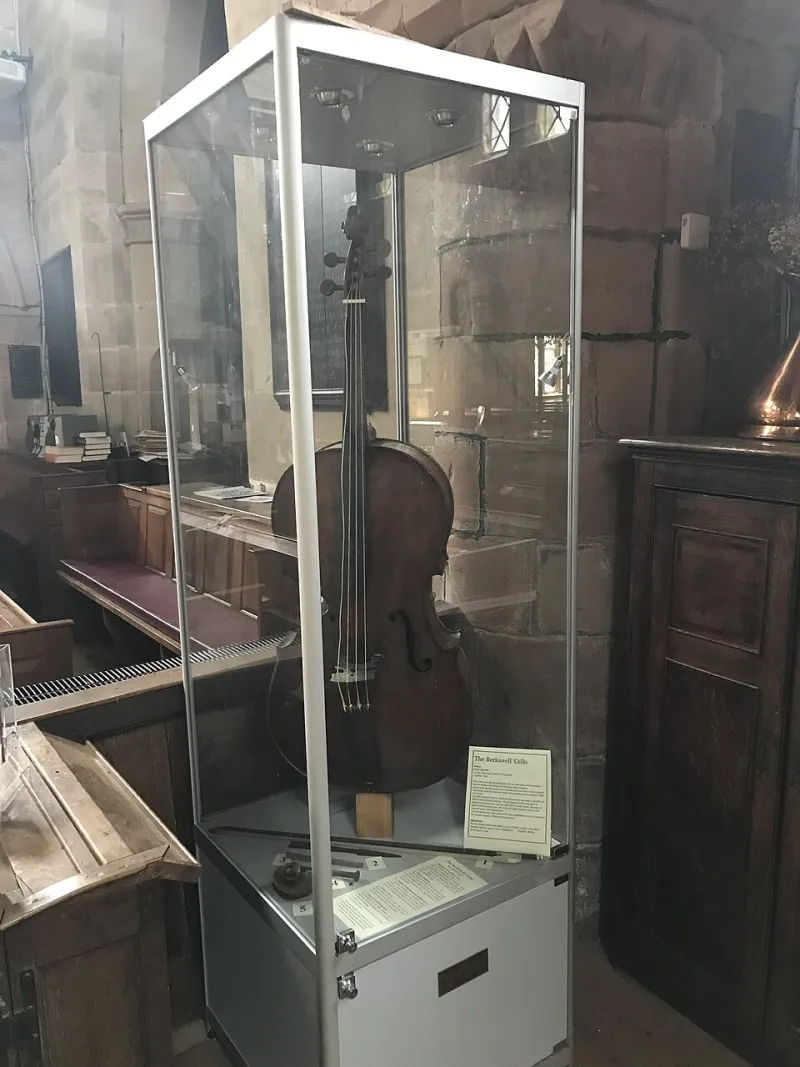
Photo: Hazel Nicholson from Coventry, United Kingdom, CC BY 2.0, via Wikimedia Commons
The instrument sitting on Ruben Salcido's workbench in a garage outside San Antonio has a body of pallet wood, a neck from a broken classical guitar, and tuners he bought in a bin at a hardware store for $3.49. He calls it a cuatro, but not without a visible wince.
"It's not a cuatro," he says. "But it's not not a cuatro. It's the thing my grandfather would have played if the parts existed where he lived."
That sentence could serve as the mission statement for a small but rapidly expanding scene: musicians from immigrant and first-generation households who are building hybrid instruments out of traditional forms, scavenged parts, and whatever the local Home Depot has in aisle 14. The results are strange, beautiful, occasionally unplayable, and increasingly central to the sound of new music.
A Sitar With a Plumbing Aisle Inside It
There's a reason this happens in garages. A real sitar is expensive, fragile, and difficult to fly with. A real kulintang ensemble requires a rack of bronze gongs that costs more than a used car. For musicians who grew up in two places at once, the traditional instrument is often the thing you left behind at a relative's house eight thousand miles away.
So you build one. Or something like one.
In a basement in Jersey City, a first-generation Bangladeshi-American named Farhan has been making what he calls "a drone box" — a lap instrument strung with hardware-store cable and tuned to a raga scale, mounted on a cutting board. In Garden Grove, California, a Filipino-American percussionist has assembled a set of kulintang-style gongs from disc brake rotors, suspended on a PVC frame, tuned by grinding small amounts off the rim.
The gong-maker's line about tuning is a good example of the improvisational spirit of the scene: "You can tune a rotor up pretty easily. Tuning it down is a longer conversation."
Memory as a Blueprint
What's striking about these instruments is how precisely they reflect memory rather than specification. A builder who learned to play from a grandmother's lap will recreate the feel, the scale, the bend of a note — and get the wood, the finish, and the ornamentation wrong in ways that are completely their own.
"I didn't know what the inside of an đàn bầu looks like," says Linh Pham, who built a version of the Vietnamese monochord in her Seattle apartment using a length of bamboo, a coconut shell, and a guitar tuner. "I knew what it sounded like. That's what I was building toward. The sound, not the object."
The results often land somewhere no commercial instrument could. Because the builders are chasing a memory instead of a model, they end up making things that fit their own hands — and their own cultural in-betweenness.
The Tuning Problems Nobody Warns Them About
There's a reason most instrument makers are specialists. Making a playable instrument requires knowing how wood moves through humidity, how string tension distributes across a bridge, how a soundboard responds to a specific attack. Garage builders learn this the hard way, usually at 11 p.m., usually with a snapped string and a bad word.
"I made four of them before one stayed in tune for a full song," one builder tells me, laughing. "And that one sounded like a cow in distress. But it stayed in tune, and I was so proud."
There's also a question of what happens when these instruments get plugged in. Many of these builds incorporate pickups — a piezo buzzer from an electronics kit, a repurposed contact mic — which changes the sound entirely. A bamboo monochord through a distortion pedal does not sound like a traditional monochord. It sounds like something new that has to be heard to be believed.
From Workbench to Wide Release
The most interesting development is what happens when one of these instruments leaves the garage. In the past couple of years, several have landed on records well outside their home genres — a detuned hybrid zither on an ambient album, a rotor-gong on a rap beat, a hacker-built drone box in a film score. Producers hear something they can't identify, ask what it is, and get an answer that doesn't quite make sense in a mix engineer's notes.
That's the moment the instrument stops being a compromise and starts being an invention. Once a sound is unidentifiable, it becomes universal. Nobody argues about whether it's authentic, because there's no authenticity to argue about.
"My grandfather would probably tell me I've done it wrong," Salcido says, holding up the cuatro that isn't quite one. "But he'd also ask to play it. And then he'd play it for forty minutes and not give it back. That's the test, right? Does somebody want to hold it?"
He has, by his count, made nine. Six of them live in other people's houses now — traded, sold, or handed off. That's a different kind of lineage than a workshop tradition. But it counts as one.