Offline on Purpose: The Musicians Ditching the Algorithm to Find Their Real Audience
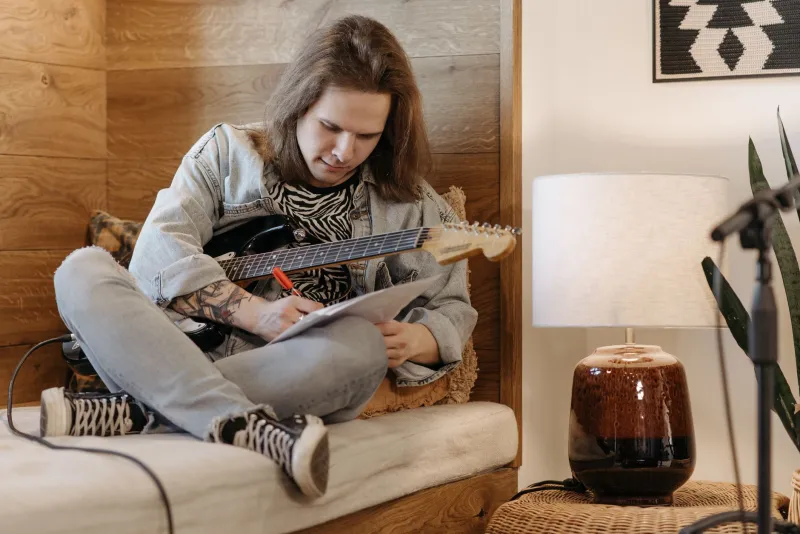
Nadia Ferreira released her last album to exactly 847 people. She knows the number because she emailed every single one of them personally — well, as personally as a mail merge allows. There was no press release. No Spotify pitch. No social media rollout. The record went to a list of people who had signed up, over the course of three years, to receive music directly from her. Some of them paid for it. Some got it free. All of them knew it was coming before anyone else.
By every conventional metric of the modern music industry, this is a failure strategy. By Nadia's metric — which involves actually being able to pay her rent and make music she believes in — it's the only strategy that's ever worked.
The Anti-Viral Movement That Doesn't Have a Name
There's a quiet but genuinely interesting shift happening at the edges of the music world, and it's moving in exactly the opposite direction from everything the industry has been telling artists to do for the past decade. A loose, uncoordinated collection of musicians — spanning folk, experimental electronic, jazz, and various global traditions — are deliberately making themselves harder to find. Less content. Fewer posts. Intentionally limited releases. Direct communication with audiences through channels that don't involve handing your data to a platform.
Nobody's calling this a movement, exactly, because the artists doing it tend to be suspicious of anything that sounds like a brand. But spend enough time talking to musicians who've opted out of algorithmic culture and you start to hear the same things over and over: the exhaustion of performing for an audience you can't see, the hollowness of engagement metrics, the specific creative damage that comes from making music with one eye permanently on what might go viral.
"I spent two years trying to crack TikTok," says Leo Adeyemi, a London-born guitarist now based in Portland who blends West African highlife with Pacific Northwest indie sensibilities. "I got decent at it. I made content. I understood the format. And then I realized I was making content about music instead of making music. Those are very different things."
The Newsletter as Sacred Space
The primary tool of this quiet resistance turns out to be almost comically unglamorous: the email newsletter. Platforms like Substack and Mailchimp have become, for a certain kind of musician, what MySpace was in 2005 — a direct line to people who actually want to hear from you, without an algorithm deciding whether your message gets delivered.
The appeal is straightforward. An email list is yours. It doesn't change its rules. It doesn't throttle your reach when you haven't posted in a while. It doesn't show your fans an ad for a competing artist right after they've read your latest update. And crucially, the people on it chose to be there — which means the baseline level of genuine interest is dramatically higher than anything you'd find in a social media following.
Jasmine Wu, who makes what she describes as "slow electronic music with Chinese classical DNA," has built a newsletter following of just under two thousand people over four years. She releases music exclusively to subscribers first, often with extended liner notes, recordings of rehearsals, and essays about the cultural traditions she's drawing from. Her open rates hover around 60 percent — a number that would make most email marketers weep with joy.
"Two thousand people reading something I wrote, really reading it, is more meaningful to me than two million passive impressions," she says. "The math of attention is different when the attention is real."
Limited Releases and the Power of Scarcity
Beyond newsletters, many of these artists are also rethinking how they release music itself. Limited physical runs — vinyl pressed in quantities of 200 or 300, cassettes, even CDRs — have become a way of creating objects that carry weight, that feel like they mean something. When a record is genuinely scarce, owning it means something different than streaming it.
This isn't new, of course. Underground music has always operated this way. But what's interesting now is that artists who could reasonably pursue mainstream distribution are actively choosing not to. The scarcity is intentional, philosophical even.
There's also a community-building logic at work here. When you release 300 copies of a record and they sell out, the 300 people who have it share a specific experience. They know something other people don't. That shared knowledge becomes the foundation of a real community — not a following, not a fan base in the corporate sense, but an actual group of humans with a common point of connection.
The Counterintuitive Math of Invisibility
The obvious objection to all of this is economic. How do you build a career if nobody can find you? The honest answer is that it's hard, and it requires accepting a ceiling on certain kinds of success. None of the artists doing this well are selling out arenas. Most of them have day jobs, or some combination of teaching, session work, and licensing income that keeps them afloat.
But here's the counterintuitive part: many of them report that their actual income from music is more stable than that of peers who have larger online followings. A devoted audience of a few thousand people who will reliably buy records, show up to shows, and support crowdfunding campaigns can generate more consistent revenue than a social media following of fifty thousand largely passive followers who discovered you through a trending sound and might unfollow you tomorrow.
"The algorithm gives you numbers that feel good but don't convert," says Leo. "My email list gives me a smaller number that actually means something when I need to fund a recording."
Making Music for Humans Again
Maybe the most interesting thing about this particular corner of the music world is how much it's changed the creative work itself. Multiple artists describe a shift in how they make music once they stopped optimizing for virality — a loosening, a willingness to be slower and stranger and less immediately accessible.
When you're not writing for the first three seconds of a TikTok scroll, you can write a song that takes four minutes to get interesting. When you're not chasing a trending sound, you can spend six months developing something genuinely new. The audience you've built through deliberate, slow community-building is, by definition, an audience that's willing to follow you somewhere unfamiliar.
That's rarer than it sounds. And in a music landscape dominated by the logic of instant gratification, it might be the most radical thing an artist can do.