No Studio, No Problem: How Bedroom Producers Broke the Definition of 'Good Sound'
There was a time — not even that long ago — when a song's legitimacy could be measured in square footage. If you recorded in a room with acoustic foam panels, a Neve console, and an engineer who'd worked with someone famous, your track had a shot. If you recorded in your parents' basement in Ohio, you were making demos. The line between those two worlds felt permanent. Then a few things happened all at once, and the line dissolved.
Affordable digital audio workstations, the explosion of YouTube tutorials, and — most dramatically — a global pandemic that locked every working musician out of every professional space simultaneously. What followed wasn't just a workaround. It was a full-scale redefinition of what professional music is supposed to sound like.
The Gear Stopped Being the Gatekeeper
For most of recorded music's history, the barrier to entry wasn't talent. It was equipment. A proper studio session in a major market could run thousands of dollars a day. Mixing and mastering added more. Then came the democratization nobody in the industry fully anticipated.
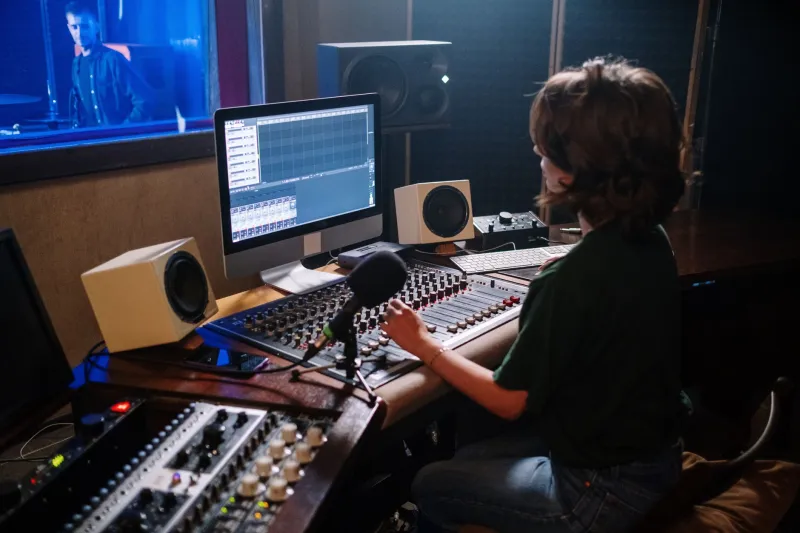
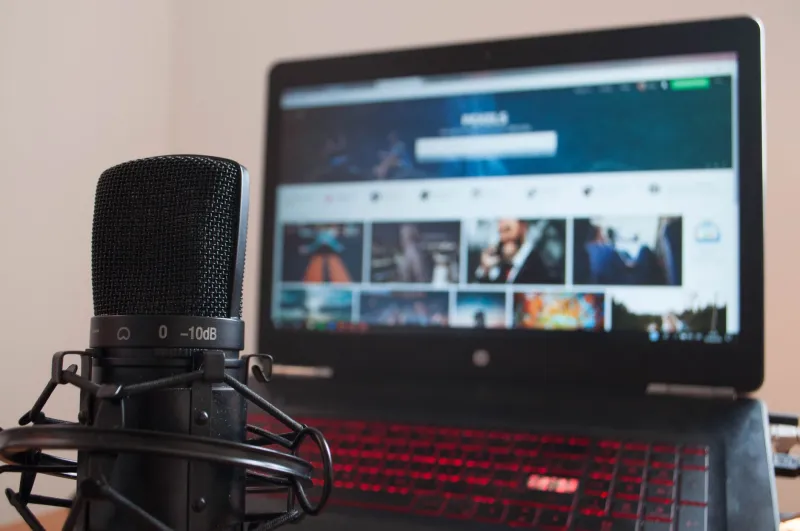
Interface hardware that once cost $3,000 now runs under $200. Software like Ableton Live, FL Studio, and Logic Pro — the same tools used on chart-topping records — are available to anyone with a laptop and a subscription. Plug-in libraries that replicate vintage synthesizers, string sections, and entire orchestras are a download away. The sonic gap between a bedroom and a commercial studio didn't close overnight, but by the time COVID-19 hit in 2020, it had narrowed to something most listeners couldn't detect.
And listeners, it turns out, weren't really listening for studio polish in the first place.
When Imperfection Became the Point
Billie Eilish recorded her debut album When We All Fall Asleep, Where Do We Go? in her brother Finneas's childhood bedroom in Highland Park, Los Angeles. It won seven Grammy Awards, including Album of the Year. That fact gets cited constantly in conversations about bedroom production, and for good reason — it didn't just prove that home recording could compete with professional studios. It proved that the aesthetic of home recording had become genuinely desirable.
The slight room reverb, the intimacy of a voice recorded close to a microphone without a full isolation booth, the lo-fi texture that gets preserved rather than scrubbed out — these aren't flaws that bedroom producers are apologizing for anymore. They're signatures. They signal authenticity in an era when listeners are increasingly suspicious of music that sounds too processed, too clean, too constructed.
The cultural appetite shifted, and the industry followed. What streaming platforms once flagged as technically deficient — tracks that didn't hit certain loudness thresholds or frequency balances — now pass through without issue because enough of them became hits.
The Pandemic as Accelerant
When studios closed in 2020, artists at every level of the industry faced the same problem at the same time. Major-label acts who'd spent years relying on professional engineers suddenly had to figure out their own signal chains. Session musicians who'd never recorded themselves had to become their own producers. The learning curve was steep, but the timeline was compressed in a way that nothing else could have forced.
What emerged from that period wasn't a temporary patch. It was a permanent shift in how artists relate to the production process. Producers who'd previously handed off mixing to specialists started learning to do it themselves. Singers who'd always performed in front of an engineer started learning what their own voice sounded like through headphones at two in the morning. That intimacy changed the music.
It also changed the economics. An artist who owns their own recording setup doesn't need to negotiate studio time, doesn't owe a production house a percentage, doesn't have to schedule around anyone else's calendar. The independence isn't just creative — it's financial. And in an industry where streaming royalties are famously thin, keeping production costs at zero is not a small thing.
What 'Radio-Ready' Even Means Now
The term 'radio-ready' used to function as a quality stamp. A track that was radio-ready had been mixed to industry specifications, mastered for broadcast, cleared of any sonic roughness that might make a program director hesitate. It was a technical designation that doubled as a social one — it meant the right people had touched it.
That designation has largely lost its authority. Radio itself has lost much of its authority. The discovery pathways that matter now — TikTok, Spotify editorial playlists, YouTube recommendations — don't apply the same filters. A track can go viral with a noticeable hiss in the background, a vocal that clips slightly on the high notes, a beat that sounds like it was assembled on a phone. Not because quality stopped mattering, but because quality got redefined by what actually moves people.
Producers working out of home setups are now getting sync placements in film and television, landing major-label deals, and headlining festivals. The resume line 'self-produced' used to be a liability. Now it's often a selling point — evidence that an artist has full creative control and isn't dependent on a machine they don't understand.
The Remaining Divide
None of this means the professional studio is dead. For certain genres — orchestral recordings, large-scale jazz productions, anything requiring live room acoustics — the infrastructure still matters enormously. And there are bedroom producers who plateau because they haven't yet learned what they don't know. Mixing and mastering are skills that take years to develop, and not everyone has the patience or the ear for it.
The divide that remains isn't really about equipment anymore. It's about knowledge and intention. A bedroom producer who understands frequency response, dynamic range, and spatial placement can make something that sounds stunning. One who doesn't will make something that sounds like a bedroom recording in the worst sense.
But here's the thing: that gap is closeable by anyone with time and curiosity, not just by anyone with a budget. And that's the fundamental change. The gatekeeping didn't disappear — it just stopped being about money.
A New Kind of Legitimacy
What the bedroom studio revolution ultimately produced isn't just cheaper music. It's a different relationship between artists and their output. When you record in the same room where you sleep, when you track vocals at midnight because that's when inspiration hits, when you master your own record because there's no one else to do it — the music carries those conditions inside it.
Listeners feel that. Maybe they can't articulate why a certain track sounds lived-in rather than manufactured, but the feeling registers. In a streaming landscape flooded with content, that quality of presence — the sense that a real person made this in real circumstances — is increasingly what separates what people save from what they skip.
The bedroom didn't just become a studio. It became the most honest room in the building.