Clock In, Tune Out: Why the Best Music Right Now Is Being Made by People With Day Jobs
There's a story we've been telling ourselves about musicians for decades. You grind. You hustle. You quit the day job, move into a cheaper city, stack your streaming numbers, and eventually — if the algorithm smiles on you — you make it. The dream is full-time. The day job is a temporary embarrassment.
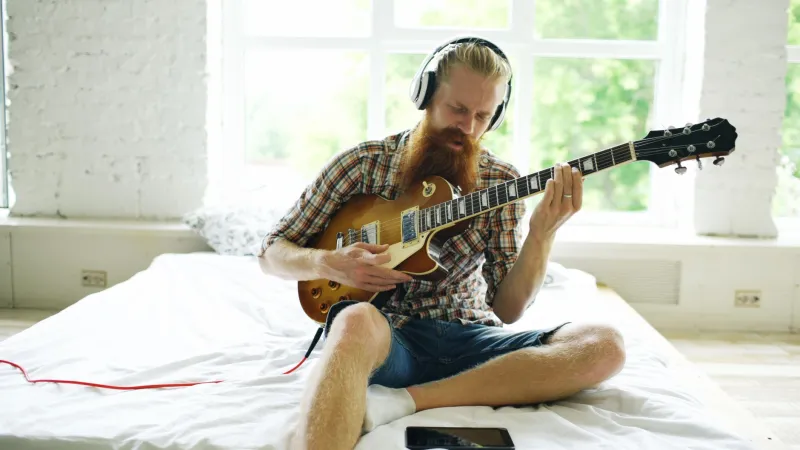
But spend any time in the corners of the music world where genuinely interesting things are happening, and you'll start noticing something that doesn't quite fit that narrative. A lot of the most adventurous artists out there are nurses, teachers, UX designers, and electricians. Not because they're waiting for their break — but because they've decided, deliberately and sometimes defiantly, that keeping a paycheck is the only way to keep making music on their own terms.
The Streaming Math Nobody Wants to Talk About
Here's the uncomfortable arithmetic underneath the hustle dream: the average independent musician earns somewhere between $0.003 and $0.005 per stream on Spotify. To clear a modest $30,000 a year from streaming alone, you'd need roughly six to ten million plays annually. For most artists, that number is a fantasy. For those chasing it, the pressure to produce content that performs algorithmically can quietly hollow out the thing that made them want to make music in the first place.
When your rent depends on your release schedule, you start optimizing. You shorten intros because data says listeners skip long ones. You chase playlist aesthetics. You release singles every three weeks because the algorithm rewards consistency. None of this is inherently wrong — but it has a way of flattening the weird edges off your sound, the parts that made it yours.
Keeping a day job removes that pressure almost entirely. Suddenly, you can spend eighteen months on an album that goes nowhere commercially and not lose your apartment over it.
"I Make Better Music Because Nobody's Counting On It"
Talk to working musicians who've chosen this path and a specific phrase comes up again and again: freedom from stakes.
Take Dara Osei, a Chicago-based producer who works full-time as a hospital administrator and releases experimental Afrobeats-adjacent electronic music under a pseudonym. He's put out three EPs in the last four years, none of which cracked ten thousand streams. He couldn't care less.
"When I was trying to do music full-time, every track had to justify itself," he says. "Is this going to get synced? Is this playlist-friendly? Now I'm just asking: is this interesting? Those are completely different questions."
Or consider the small but growing world of what some are calling "craft music" — artists in their 30s and 40s who've stepped off the content treadmill and retreated into slower, stranger creative processes. Many of them hold down professional jobs and treat their music the way a weekend woodworker treats a cabinet: with patience, with pride, and without needing it to feed them.
The Global Context American Artists Are Starting to Notice
This isn't entirely new, and it's definitely not uniquely American. In much of the world, the idea of separating artistic practice from financial survival is practically the default. Traditional musicians in West Africa, folk instrumentalists across Eastern Europe, and classical practitioners in parts of Southeast Asia have long operated within community structures that don't expect music to be a primary income source. The art exists alongside life, not instead of it.
What's changed is that American artists — raised on a hustle mythology that treated "making it" as the only valid endpoint — are increasingly looking at those models with something like envy. The romantic image of the starving artist grinding toward a record deal has started to look less like ambition and more like a trap.
Social media has quietly accelerated this shift. Platforms like TikTok and Instagram have made it possible to build a genuine audience without label infrastructure — but they've also created a new form of creative servitude, where the content machine demands constant feeding. Some artists are opting out of that bargain entirely.
The Day Job as Creative Infrastructure
There's something else happening here beyond simple financial logic. For a lot of musicians, the day job isn't just paying the bills — it's actively feeding the music.
A middle school music teacher in Atlanta who produces neo-soul on weekends has a direct line into how young people are actually experiencing rhythm and melody. A landscape architect in Portland who plays in a Balkan brass band on weekends brings a spatial, structural sensibility to arrangements that her bandmates — all of them weekend warriors with professional careers — find genuinely distinctive. A software engineer in Brooklyn who records ambient drone music in his spare bedroom approaches sound design with a systematic rigor that producers who learned exclusively through music school often lack.
The day job, in other words, isn't always the enemy of the music. Sometimes it's the thing that makes the music strange and specific in ways that purely careerist paths don't allow.
Rethinking What "Making It" Actually Means
None of this is an argument against trying to make a living from music. Plenty of artists do, and the world is richer for it. The point isn't that financial success corrupts — it's that the specific economic structure of the current streaming era creates pressures that can distort creative decision-making in ways that aren't always visible until the damage is done.
What the moonlighting musician movement — if you can call it that — is really challenging is the idea that artistic legitimacy requires financial dependence on your art. That you're not a "real" musician if you also have a job. That the hustle is the only honest path.
For a generation of artists who've watched the streaming economy chew through their predecessors' catalogs and spit out pennies, that story has started to sound less like inspiration and more like a con.
The Quiet Revolution in Your Local Venue
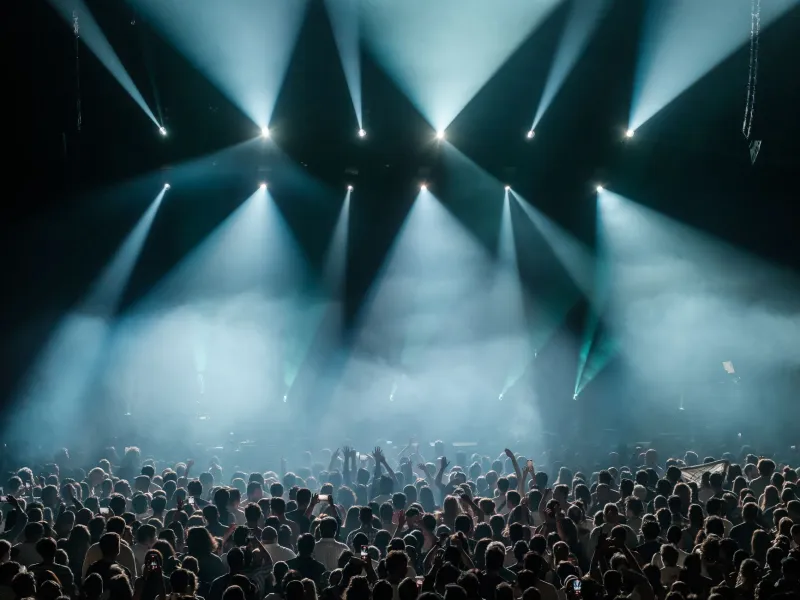
Next time you're at a small venue — a 200-capacity room in your city, the kind of place that smells like old beer and ambition — look at who's on stage. There's a decent chance the artist who impresses you most has a Monday morning meeting to get back for. They're not there because they have to be. They're there because they chose it, cleanly, without needing it to work out.
That's a different kind of performer. And increasingly, it's making for a different kind of music — looser, stranger, less worried about what the numbers say.
Maybe the most radical thing a musician can do right now isn't quit their job. Maybe it's keep it.