From Cemetery to Feed: The Ghanaian Pallbearers Who Accidentally Taught the World to Laugh at Death
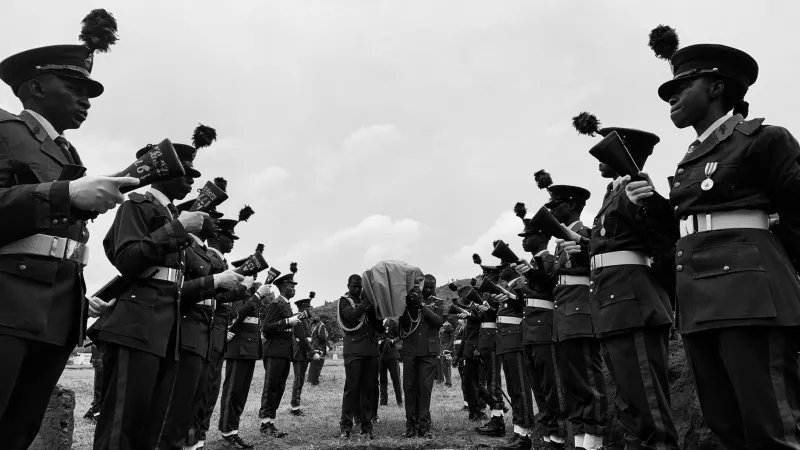
If you were online at any point during 2020, you saw it. A coffin, hoisted on the shoulders of men in matching black suits and white gloves, dancing with a precision that felt almost choreographed — because it absolutely was. Set to a looping electronic beat, the clip became the go-to punchline for every fail video, every close call, every moment that could've ended badly. The message was clear and darkly funny: mess up badly enough, and these guys are coming for you.
But here's what most people scrolling past that meme never stopped to ask: where did this actually come from, and what does it mean to the people who started it?
The Real Story Behind the Dance
The tradition of celebratory funerals isn't new in Ghana — particularly among the Asante and Ga peoples of southern Ghana, where death has long been treated not as a full stop, but as a transition worth marking with music, color, and yes, movement. The idea is rooted in the belief that a life well-lived deserves a joyful send-off. Grief and celebration aren't opposites here; they coexist in the same ceremony.
Benjamin Aidoo, the man who became the face of the viral moment, runs a pallbearer group called Nana Otafrija Pallbearing and Waiting Services out of Prampram, a coastal town near Accra. His crew doesn't just carry coffins — they perform. They've been doing it for years, long before any algorithm noticed them. The synchronized footwork, the smooth transitions, the way they keep perfect rhythm while bearing the weight of someone's loved one — it's a craft, and it's deeply intentional.
The specific track that soundtracked the meme? It's called Astronomia, a 2010 house track by Russian producer Tony Igy that had been sitting quietly in the corners of the internet for a decade before someone paired it with Aidoo's footage and unleashed something nobody could have predicted.
How a Clip Becomes a Cultural Tornado
The video first circulated widely in 2017, but it was the COVID-19 pandemic that turned it nuclear. Stuck at home, the internet collectively leaned into dark humor as a coping mechanism, and suddenly a dancing coffin felt weirdly cathartic. TikTok's algorithm, which rewards loopable, high-emotion content, pushed it everywhere. The "coffin dance" became a template — a visual shorthand for impending doom that anyone could slap onto any video of someone doing something risky.
By mid-2020, the meme had appeared in news segments, political commentary, sports highlight reels, and even a few health campaigns that used it to warn people about COVID risks. Ghana's own health ministry leaned into it, running a public service announcement featuring the pallbearers. It was clever, it was effective, and it was deeply weird.
Aidoo himself became something of a reluctant celebrity. Interviews rolled in. He handled it with grace, explaining the tradition to journalists who'd never thought to ask before the meme made it unavoidable. He seemed genuinely pleased that the world was paying attention to something he was proud of — even if the context had been stripped down to a punchline.
The Part Nobody Wants to Talk About
Here's where it gets complicated. For every person who watched that meme and got curious — who Googled Ghanaian funeral traditions, who looked up Tony Igy's track, who wondered about the broader cultural landscape that produced something this visually striking — there were hundreds more who just laughed and kept scrolling.
The meme format fundamentally erased the ceremony. The coffin in those clips wasn't a prop. There was a real person inside it. Someone's parent, sibling, child. The pallbearers weren't performing for the internet — they were performing for a grieving family who had hired them specifically because this tradition brings comfort. The dance is an act of love and service, not content creation.
When Western internet culture absorbed that footage and turned it into a template for "you're about to die," it flipped the meaning entirely. What was originally about honoring a life became a joke about ending one. That's not a subtle shift — it's a complete inversion.
This pattern isn't unique to this moment. Sacred dances from Bali, healing rituals from Indigenous communities across the Americas, devotional music from South Asian traditions — all of it has been decontextualized and repackaged by platforms that don't distinguish between a ceremony and a clip. The algorithm doesn't know the difference between a prayer and a punchline, and it doesn't particularly care.
What Actually Got Through
And yet — and this is where it gets genuinely interesting — the viral moment did something unexpected alongside all the flattening. It introduced millions of Americans and Europeans to the concept of the "fantasy coffin," an elaborate Ghanaian tradition of burying people in custom-built coffins shaped like the things they loved in life. A fisherman gets buried in a fish-shaped coffin. A farmer, a cocoa pod. A pilot, a plane. The artistry is extraordinary, and craftsmen like the Kane Kwei Carpentry Workshop in Accra have been making these for decades.
Searches for Ghanaian music spiked. Afrobeats artists reported new listeners who'd traced a path from the meme to the culture. Benjamin Aidoo's crew got bookings they never would have otherwise. Tony Igy's Astronomia hit streaming charts in countries that had never heard of him.
None of that undoes the decontextualization. But it complicates the clean narrative that viral moments are purely extractive. Sometimes a distorted mirror still reflects something real, and some people are curious enough to look past their own reflection.
The Bigger Question
What the coffin dance phenomenon really exposed is a structural problem with how digital platforms handle cultural material. There's no mechanism for context. No way to attach a caption that says: this is sacred, here's why. The clip travels without its story, which means the story has to be told separately — in articles like this one, in interviews, in the conversations that happen after someone asks "wait, but what does it actually mean?"
Ghana's funeral traditions are rich, layered, and genuinely worth understanding on their own terms. The pallbearers of Prampram are skilled artists operating within a living cultural framework that treats death with more honesty and creativity than most Western traditions manage. That deserves more than a meme.
Aidoo said in one interview that he hoped the attention would bring tourists to Ghana, that people would come see the real thing. It's a generous response from someone whose life's work got turned into a joke without his permission.
The world's rhythms don't always travel cleanly across borders. Sometimes they arrive stripped of their heartbeat, just the melody left, bouncing off walls that don't know what they're echoing. The job, maybe, is to keep putting the heartbeat back in.