Dead Genres Don't Die: Meet the TikTok Kids Bringing Forgotten Music Back from the Brink
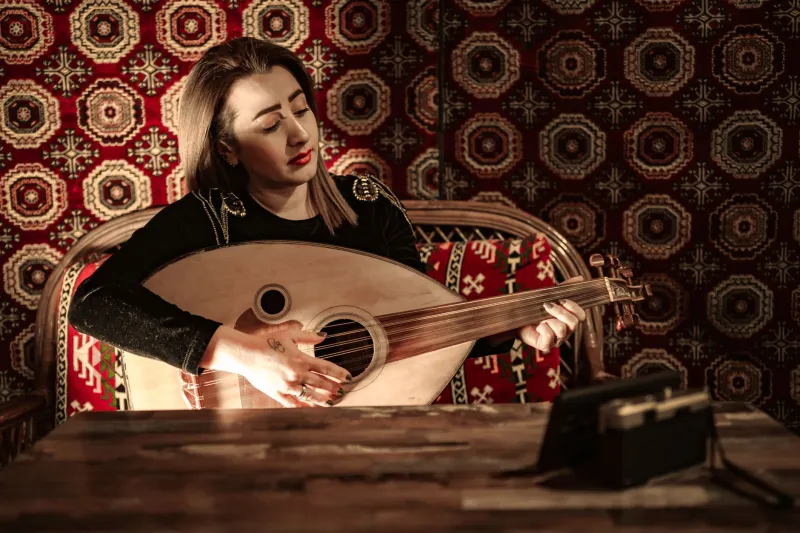
Somewhere in a Phoenix apartment, a 22-year-old named Marisol is learning to play the jarana huasteca — a small, eight-string Mexican guitar that most people in her own family had never heard of. She didn't find it in a music school. She found it in a three-minute TikTok that showed up between a makeup tutorial and a cat video. Six months later, she has 47,000 followers and a comment section full of people saying the same thing: I didn't know this was mine too.
This is what musical resurrection looks like in 2024. Not dusty archives. Not university ethnomusicology departments. Just a phone camera, an algorithm, and a generation of young people hungry to connect with something real.
The Accidental Archivist
For most of recorded history, preserving dying musical traditions was the job of academics. Scholars with grants and field recorders would travel to remote villages, document what they found, and file it away in institutional libraries where it would be lovingly catalogued and almost never heard again.
That system saved a lot of music. It also kept that music behind glass.
What's happening now is fundamentally different. Gen Z creators — many of them first- or second-generation Americans navigating hyphenated identities — are discovering ancestral music not because someone assigned it to them, but because the algorithm served it up at exactly the right moment. A video of an elderly Hmong woman playing the qeej. A clip of a Lebanese mijwiz player busking in Beirut. A shaky phone recording of Georgian polyphonic singers at a family gathering in Tbilisi.
These videos get shared. They get remixed. They get learned.
Twenty-year-old Dawit, a second-generation Ethiopian-American based in Atlanta, describes the moment he first heard an azmari singer on his For You page as "a door opening that I didn't know was closed." Within weeks, he was in a Facebook group with amateur musicians from Addis Ababa, learning the kirar — a traditional six-string lyre — through a combination of YouTube tutorials, voice notes, and live-streamed lessons from a retired music teacher in Gondar.
"My parents came here and they were focused on surviving," he says. "They didn't have time to teach me this stuff. But it never disappeared. It was just waiting."
Imperfect and Alive
Here's the thing the purists don't love to admit: this kind of revival is messy. The young musicians picking up these traditions aren't always learning them correctly. Tunings get approximated. Rhythms get smoothed out for ears trained on Western pop. Instruments get modified because the authentic version is impossible to find in suburban Ohio.
But there's a compelling counterargument, and it sounds something like: so what?
Musical traditions have always evolved through contact, migration, and misinterpretation. The blues absorbed African rhythms through the trauma of the Middle Passage and came out the other side as something new and devastating and entirely its own. Reggaeton was built on Jamaican riddim patterns filtered through Puerto Rican street culture and Panamanian club nights. Purity is a myth that tends to serve gatekeepers more than musicians.
What these young creators are doing — even when they get it "wrong" — is keeping a conversation alive. They're creating a demand signal that says: this music matters, this music has an audience, this music deserves to exist in the present tense.
When the Community Pushes Back
That said, it's not all wholesome homecoming stories. The complications are real, and the comment sections make sure you know it.
When a Korean-American creator in Los Angeles posted a video of herself learning to play the gayageum — a traditional twelve-string zither — she received thousands of supportive messages. She also received a wave of criticism from Korean users who felt she was performing heritage she hadn't earned, reducing a deeply spiritual instrument to content. The debate that erupted in her comments touched on colonialism, diaspora identity, and who gets to define authenticity for a culture they grew up outside of.
Similar tensions have flared around young Navajo musicians incorporating traditional songs into hip-hop production, Filipina-American creators learning kulintang gong music from YouTube, and a viral moment where a white creator's "discovery" of mbira music overshadowed the Zimbabwean musicians who had been posting the same content for years without a fraction of the engagement.
These aren't small questions. They're the same questions that have always haunted cultural exchange — just playing out faster, louder, and with a reply button.
The Elders Are Watching
What's genuinely surprising is how many traditional musicians and cultural elders have leaned into this moment rather than away from it.
In Vietnam, a master of the đàn bầu — a single-string instrument capable of an almost supernatural range of tones — began posting tutorial videos after noticing that young Vietnamese-Americans were searching for lessons online and finding almost nothing. His account now has subscribers from fifteen countries. He's in his seventies. He learned the instrument in a village with no electricity.
"I used to think this music would die with my generation," he said in a subtitled video that racked up two million views. "Now I think maybe it was just sleeping."
That image — music sleeping rather than dying — keeps coming up in conversations with young revivalists. There's a spiritual dimension to what they're doing that sits alongside the content strategy and the follower counts. Many describe the act of learning these instruments as a form of grief, or healing, or both. They're reaching back through time and making contact with people they never met.
What Happens Next
The honest answer is that nobody knows. Some of these micro-revivals will fade when the trend cycle moves on. Others will calcify into something new — hybrid genres that carry the DNA of the original tradition while sounding nothing like it. A few might actually feed back into the source communities, bringing diaspora money and attention to musicians who've been playing in obscurity for decades.
What seems clear is that the old gatekeeping model — where a handful of institutions decided which traditions deserved preservation and which ones would be allowed to quietly disappear — has been permanently disrupted. The archive is now distributed. The curators are teenagers with ring lights.
Is that ideal? Probably not. Is it better than silence? Ask Marisol, playing her jarana huasteca in a Phoenix apartment while a grandmother in Veracruz watches the livestream and types, in Spanish, that's exactly right, keep going.
Some music was never extinct. It was just waiting for someone to look.